
Most value propositions are a list of features with a slogan on top.
A real value proposition does a harder job. In two lines, it has to tell a stranger who the product is for, what it is, what changes for them, and why they should believe it. Most companies manage two of those four. The best manage all of them without the sentence feeling crowded.
So we took the value proposition from 20 company homepages, the headline and the line beneath it, and broke each one into those four parts. Every example below was read from the live homepage on October 23, 2026.
The short version: the strongest value propositions are specific about one thing the reader cares about, and they back it with a number. Half of these 20 show a number somewhere in the hero.
Test your value proposition on your homepage.
What is a value proposition?
A value proposition is a short statement of why a customer should choose your product: who it is for, what it does for them, and what makes it different. On a website it usually lives in the hero section, as the headline plus the line beneath it.
It is not the same as a tagline. A tagline is a brand line that rarely changes. A value proposition is an argument for buying, and it often changes as the product and the market change. We looked at headlines on their own in our website headline examples; here we look at the headline and supporting line together.
The four parts of a value proposition
Every example below is broken into the same four parts:
- Who it is for. The customer, named or clearly implied.
- What it is. The product category, in words the customer would use.
- The outcome. What changes for the customer after they use it.
- Proof or difference. A number, a rating, a customer count, or a claim about what makes it unlike the alternatives.
How we checked these 20
Each homepage was loaded in a desktop browser at 1440 × 900 on October 23, 2026. We recorded the headline and the line beneath it exactly as shown, plus any number, rating or counter in the hero. Where a site’s own copy contains a dash, we quote around it rather than change their words.
Several sites were left out because their value proposition was not stable: Gong and Superhuman rotate their hero copy, Notion rotates one word of its headline, and Rippling showed a different headline on October 16 than on October 23, which suggests it is testing versions. Uber, Lyft and DocuSign showed location-specific content from our connection, so they were left out too.
What the 20 showed:
| What we counted | Result |
|---|---|
| Heroes that show a number (in the copy, a rating or a live counter) | 10 of 20 |
| Value propositions that mention AI | 12 of 20 |
| Value propositions that claim to be the only or unlike anything else | 2 of 20 |
Half show a number. Mercury’s “10 minutes”, Zendesk’s “up to 80%”, Toast’s “180,000 locations”, Wise’s “under 20 seconds” and live counters on Stripe and Ramp all turn a promise into something you can check.
Twelve of 20 mention AI. In October 2026, AI is the most common word in a software value proposition. It is also the least specific, which is why the examples that stand out pair it with an outcome.
Value propositions that lead with the outcome
1. Ramp
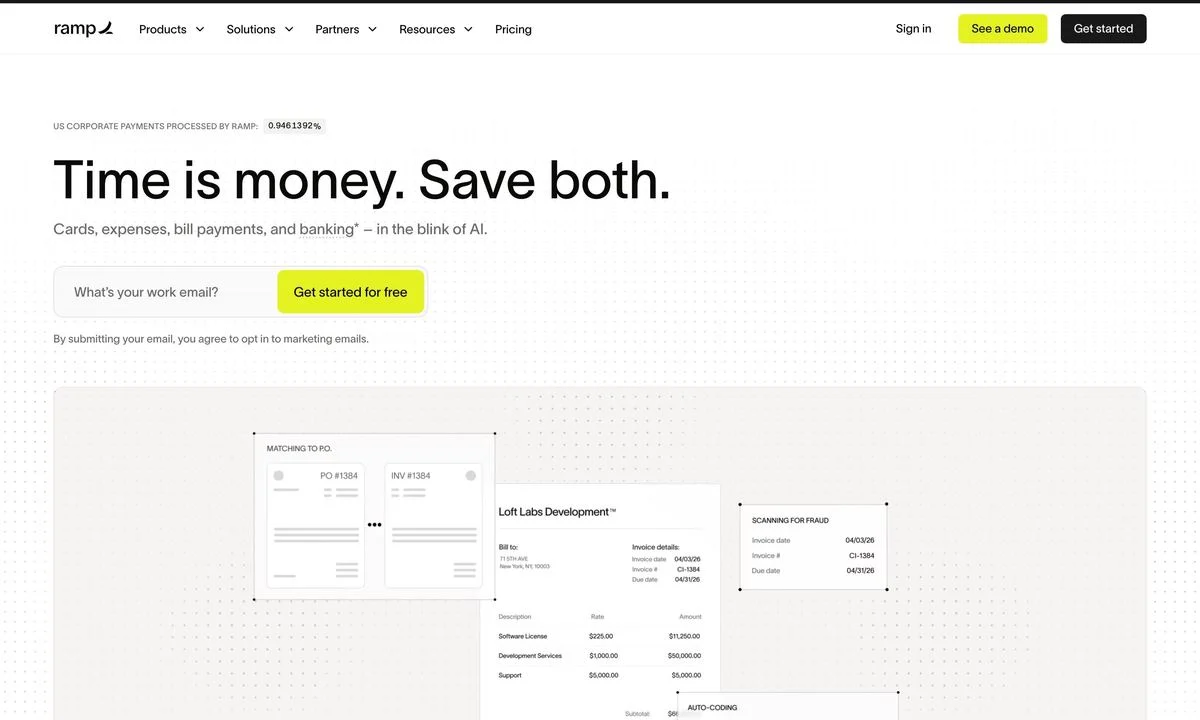
Example: Ramp homepage
The value proposition: “Time is money. Save both.” Beneath it: “Cards, expenses, bill payments, and banking”, followed by “in the blink of AI.”
Broken down:
- Who: finance teams, implied by the products listed.
- What: corporate cards, expenses, bill payments and banking.
- Outcome: save time and money.
- Proof: a live counter of US corporate payments processed by Ramp, above the headline.
Steal this: If your outcome is two things, put both in the headline. “Save both” does it in two words.
2. Gusto
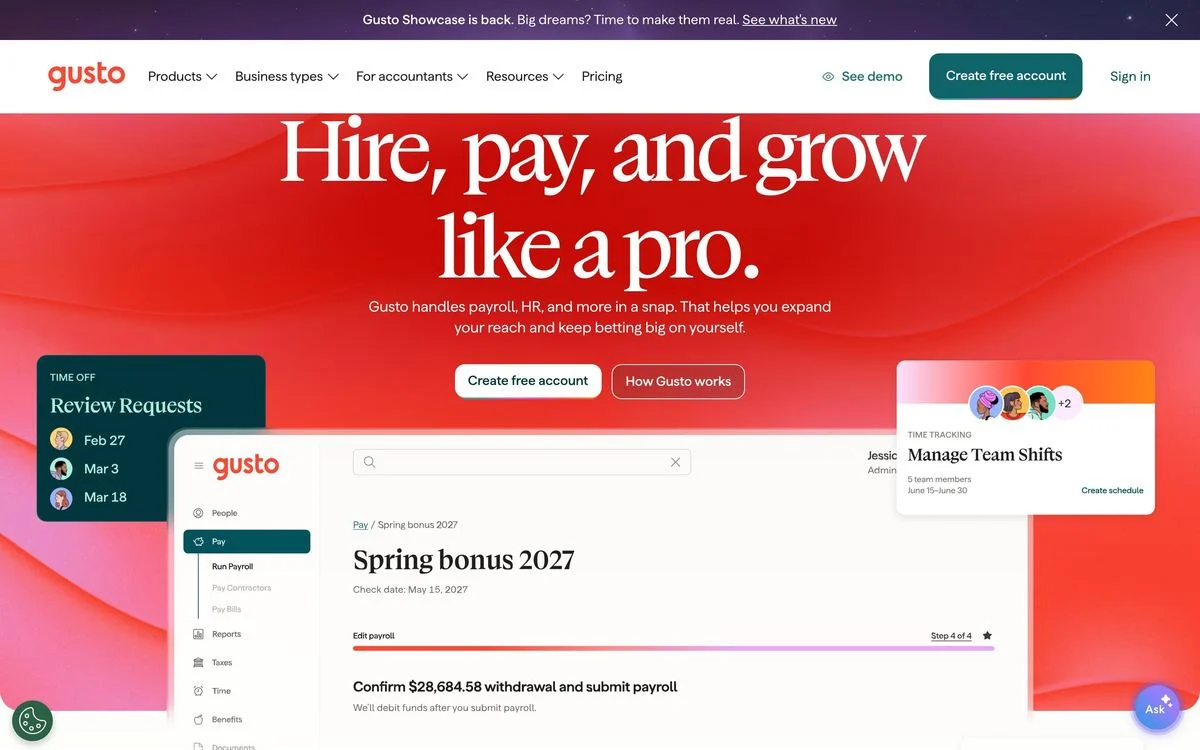
Example: Gusto homepage
The value proposition: “Hire, pay, and grow like a pro.” Beneath it: “Gusto handles payroll, HR, and more in a snap. That helps you expand your reach and keep betting big on yourself.”
Broken down:
- Who: small business owners, implied by “betting big on yourself”.
- What: payroll and HR.
- Outcome: hire, pay and grow, with less effort.
- Proof: none in the hero.
Steal this: Write the headline as the verbs your customer does, then name the category in the line beneath.
3. Calendly
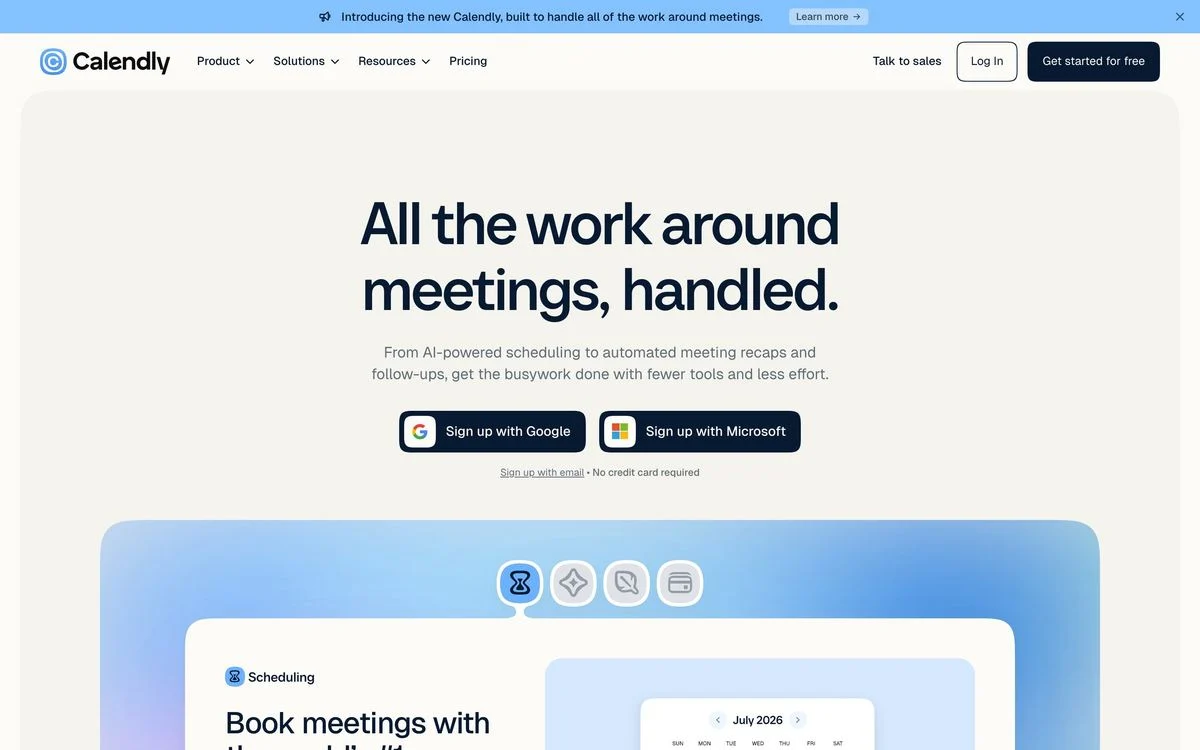
Example: Calendly homepage
The value proposition: “All the work around meetings, handled.” Beneath it: “From AI-powered scheduling to automated meeting recaps and follow-ups, get the busywork done with fewer tools and less effort.”
Broken down:
- Who: anyone who books meetings.
- What: AI-powered scheduling, recaps and follow-ups.
- Outcome: the busywork is done, with fewer tools.
- Proof: none in the hero.
Steal this: Name the annoying part of the job, then say it is handled.
4. Dropbox
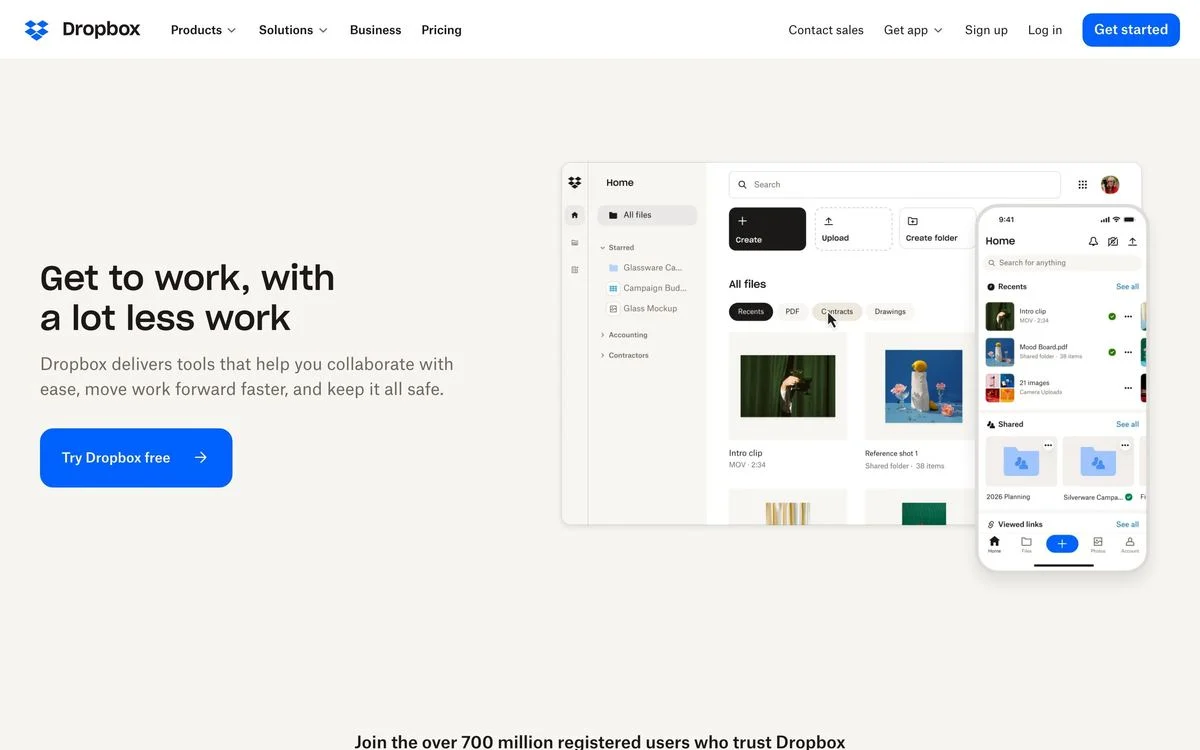
Example: Dropbox homepage
The value proposition: “Get to work, with a lot less work.” Beneath it: “Dropbox delivers tools that help you collaborate with ease, move work forward faster, and keep it all safe.”
Broken down:
- Who: teams, implied.
- What: collaboration tools, described broadly.
- Outcome: less work, faster progress, safe files.
- Proof: none in the hero.
Steal this: A play on words works when the second half states the benefit plainly, as Dropbox’s does.
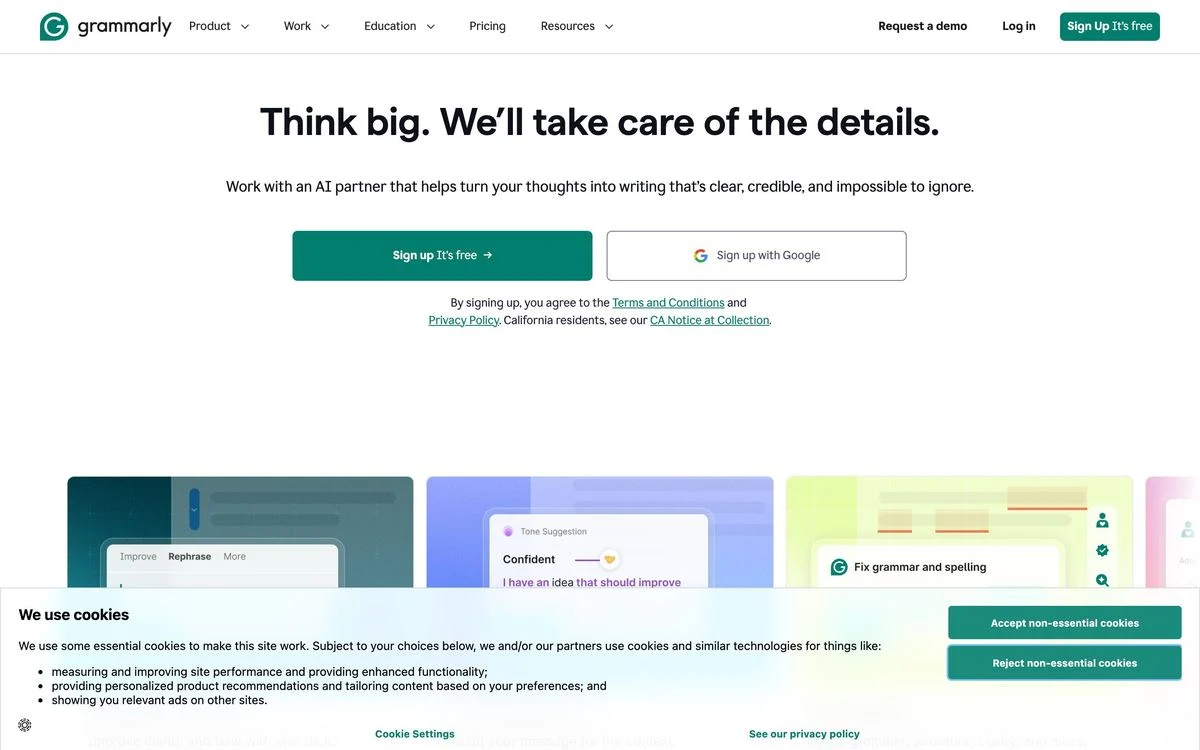
5. Grammarly
Example: Grammarly homepage
The value proposition: “Think big. We’ll take care of the details.” Beneath it: “Work with an AI partner that helps turn your thoughts into writing that’s clear, credible, and impossible to ignore.”
Broken down:
- Who: anyone who writes for work.
- What: an AI writing partner.
- Outcome: writing that is clear, credible and hard to ignore.
- Proof: none in the hero.
Steal this: Split the work in the headline: what the customer does, and what you do for them.
6. Vanta
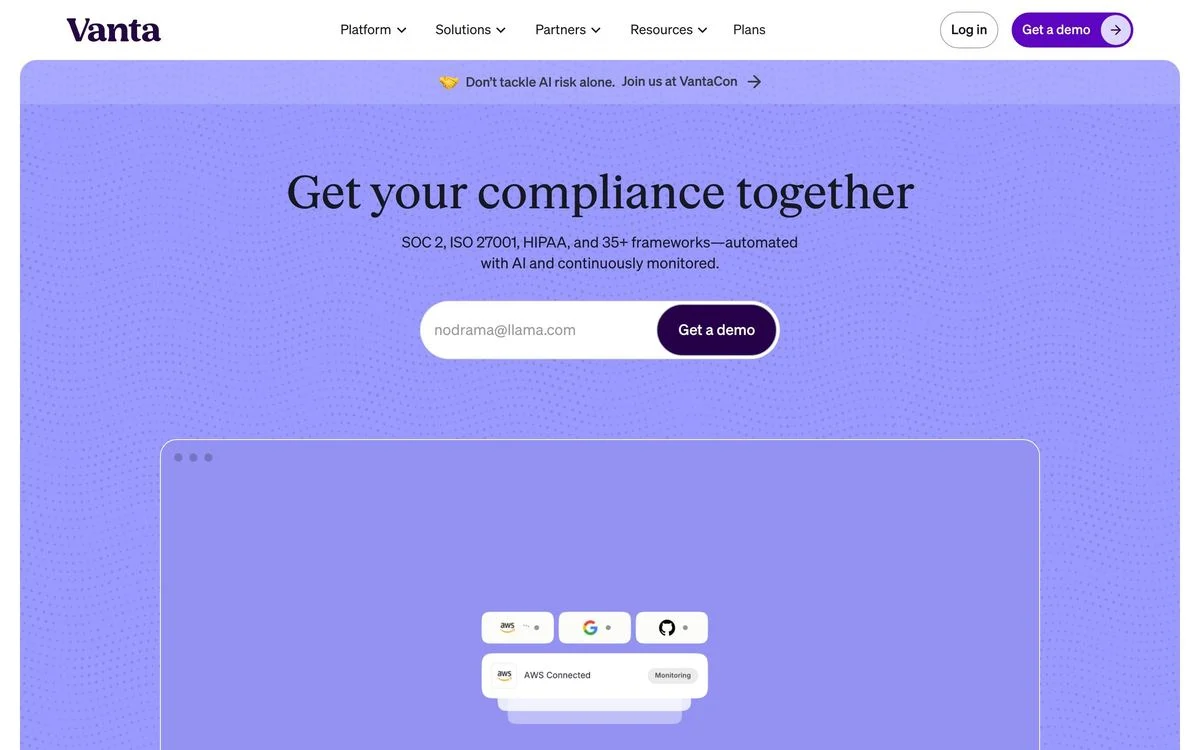
Example: Vanta homepage
The value proposition: “Get your compliance together.” Beneath it: “SOC 2, ISO 27001, HIPAA, and 35+ frameworks”, described as “automated with AI and continuously monitored.”
Broken down:
- Who: companies that need security compliance.
- What: compliance automation.
- Outcome: compliance that is organised and stays that way.
- Proof: “35+ frameworks” in the copy and “Trusted by 16,000 businesses” below it.
Steal this: If your buyer knows the standards by name, list them. SOC 2 and HIPAA say more to a compliance buyer than any adjective.
Value propositions that lead with the category
7. Stripe
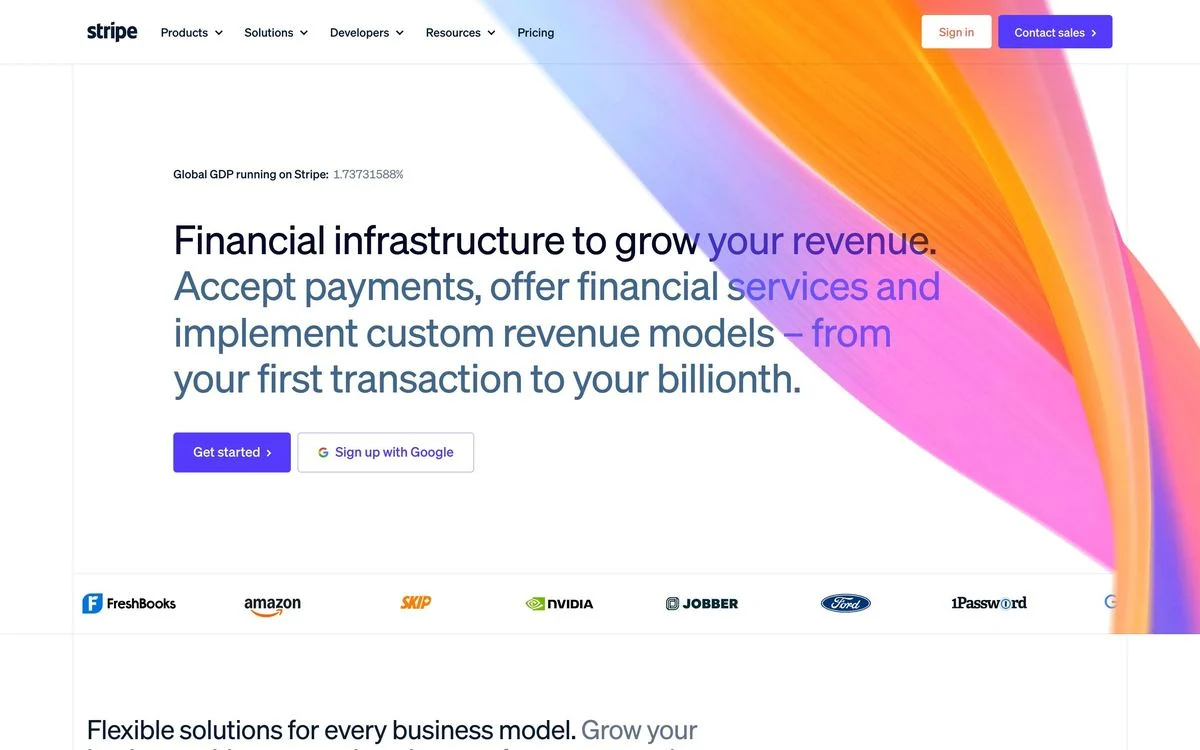
Example: Stripe homepage
The value proposition: “Financial infrastructure to grow your revenue.” Beneath it: “Accept payments, offer financial services and implement custom revenue models”, ending “from your first transaction to your billionth.”
Broken down:
- Who: businesses of every size, from first transaction to billionth.
- What: financial infrastructure.
- Outcome: grow revenue.
- Proof: a live counter of the share of global GDP running on Stripe.
Steal this: Show the range of customers you serve in one phrase. “First transaction to your billionth” covers startups and enterprises at once.
8. Linear
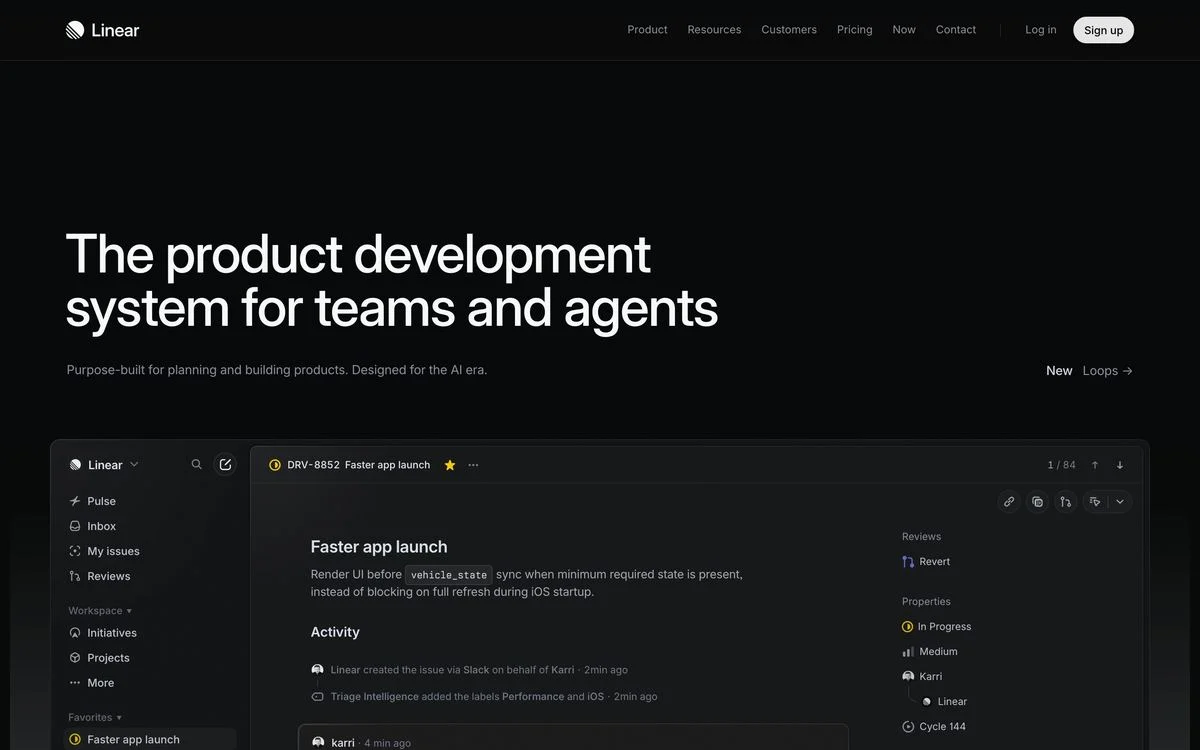
Example: Linear homepage
The value proposition: “The product development system for teams and agents.” Beneath it: “Purpose-built for planning and building products. Designed for the AI era.”
Broken down:
- Who: product teams, and the AI agents working with them.
- What: a product development system.
- Outcome: planning and building products.
- Proof: none in the hero; the product screenshot below does that job.
Steal this: Name the category you want to own, even if it is broader than the one you started in.
9. Zendesk
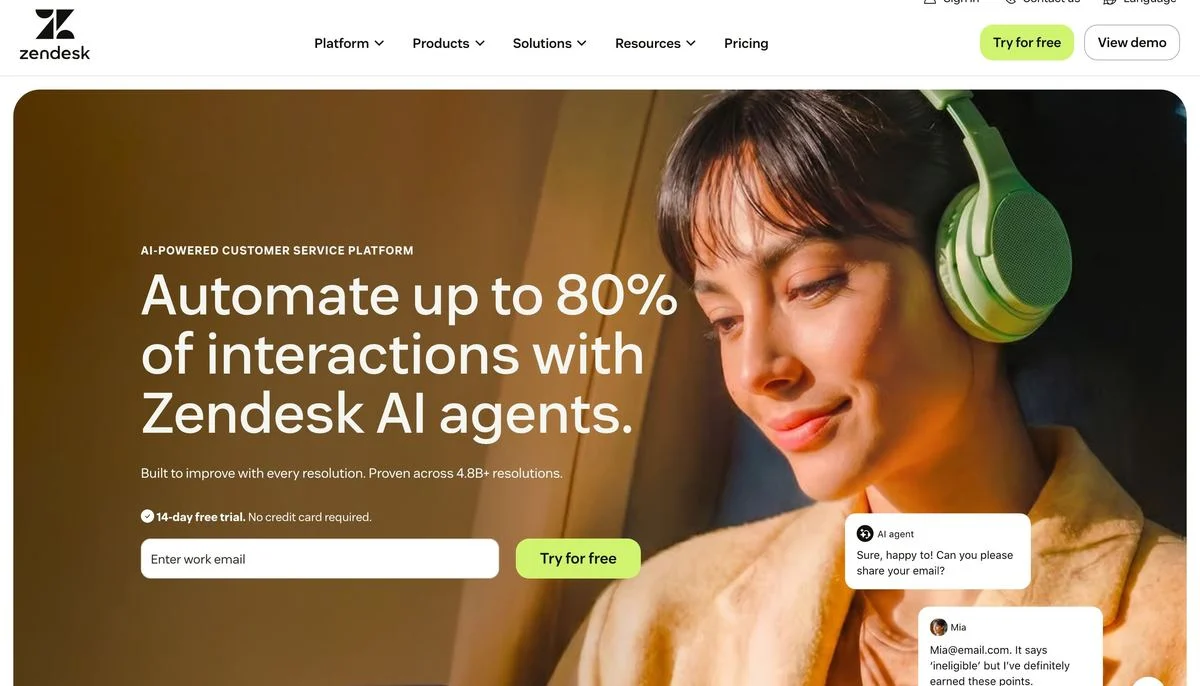
Example: Zendesk homepage
The value proposition: An eyebrow reading “AI-powered customer service platform”, then “Automate up to 80% of interactions with Zendesk AI agents.”
Broken down:
- Who: customer service teams.
- What: an AI-powered customer service platform.
- Outcome: automated customer interactions.
- Proof: “up to 80%”.
Steal this: Put the category in the eyebrow and the outcome, with its number, in the headline.
10. Zoom
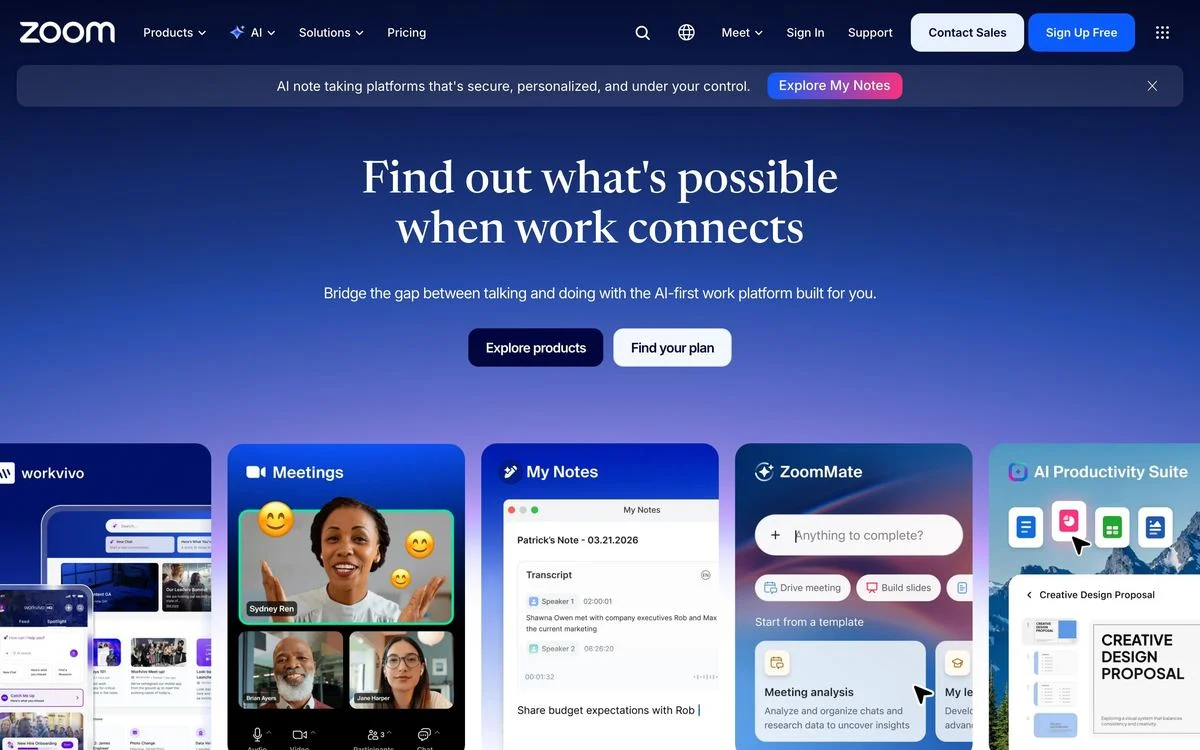
Example: Zoom homepage
The value proposition: “Find out what’s possible when work connects.” Beneath it: “Bridge the gap between talking and doing with the AI-first work platform built for you.”
Broken down:
- Who: teams, “built for you”.
- What: an AI-first work platform.
- Outcome: turning conversations into action.
- Proof: none in the hero.
Steal this: “Bridge the gap between talking and doing” names a real problem in six words. Find the gap your product closes and name both sides.
11. Loom
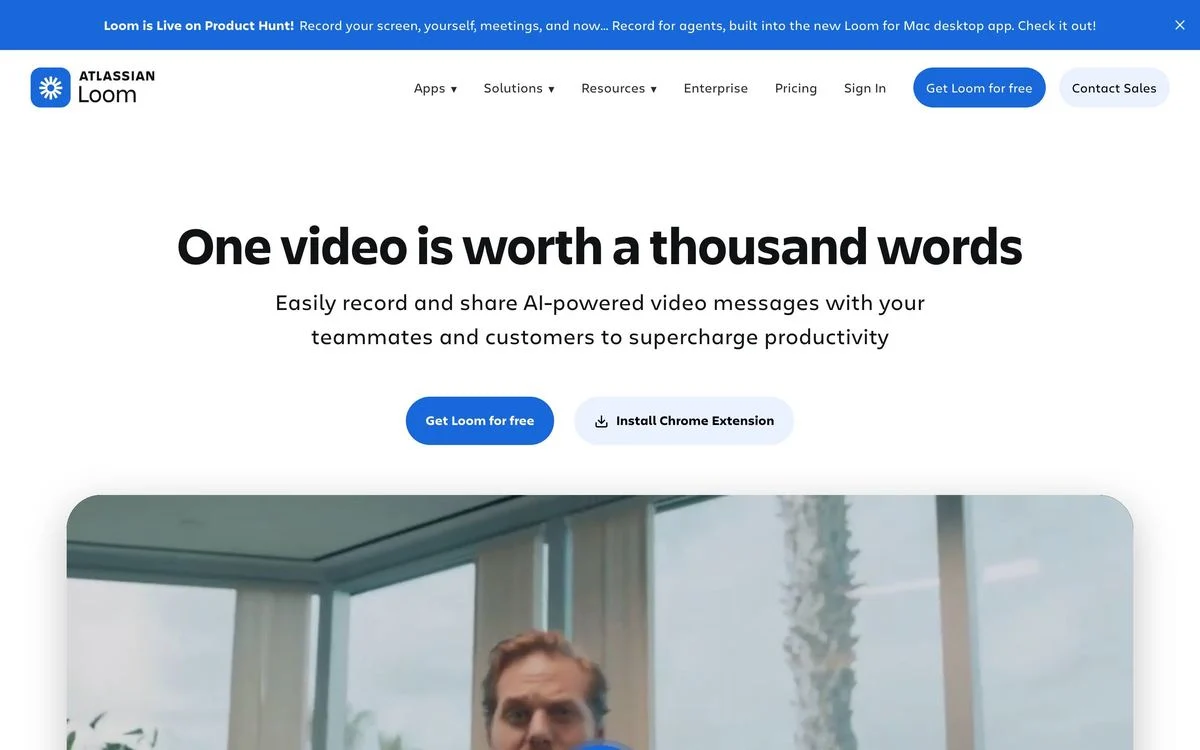
Example: Loom homepage
The value proposition: “One video is worth a thousand words.” Beneath it: “Easily record and share AI-powered video messages with your teammates and customers to supercharge productivity.”
Broken down:
- Who: people who explain things to teammates and customers.
- What: AI-powered video messages.
- Outcome: more productive communication.
- Proof: none in the hero.
Steal this: Borrow a phrase everyone knows and change one word. The familiarity does half the persuading.
See your value proposition on the page
Draft a hero with your headline, a proof point and one button in Ploy, then compare it with the versions above.
Value propositions that lead with the customer
12. ServiceTitan
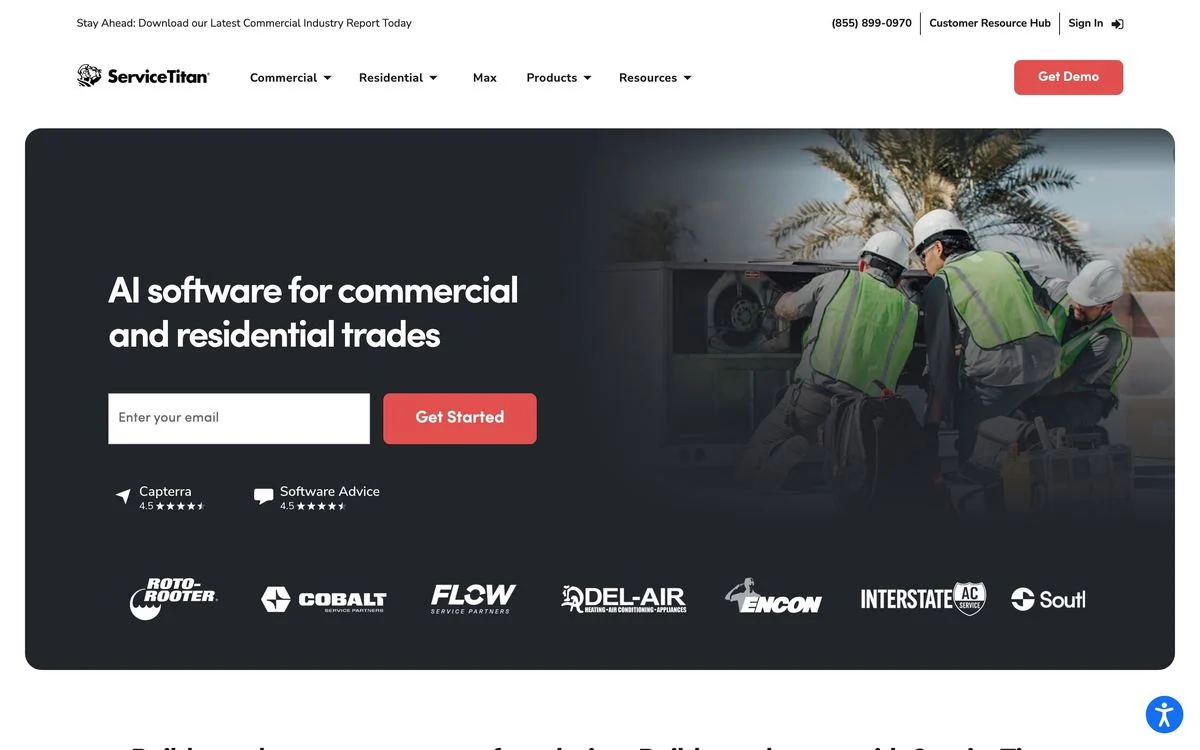
Example: ServiceTitan homepage
The value proposition: “AI software for commercial and residential trades”, with an email field, a “Get Started” button and ratings from Capterra and Software Advice.
Broken down:
- Who: commercial and residential trades businesses.
- What: AI software.
- Outcome: not stated in the hero.
- Proof: review-site ratings directly beneath.
Steal this: If your market is a specific industry, name the industry. A plumbing business owner knows in one line that this is for them.
13. Toast
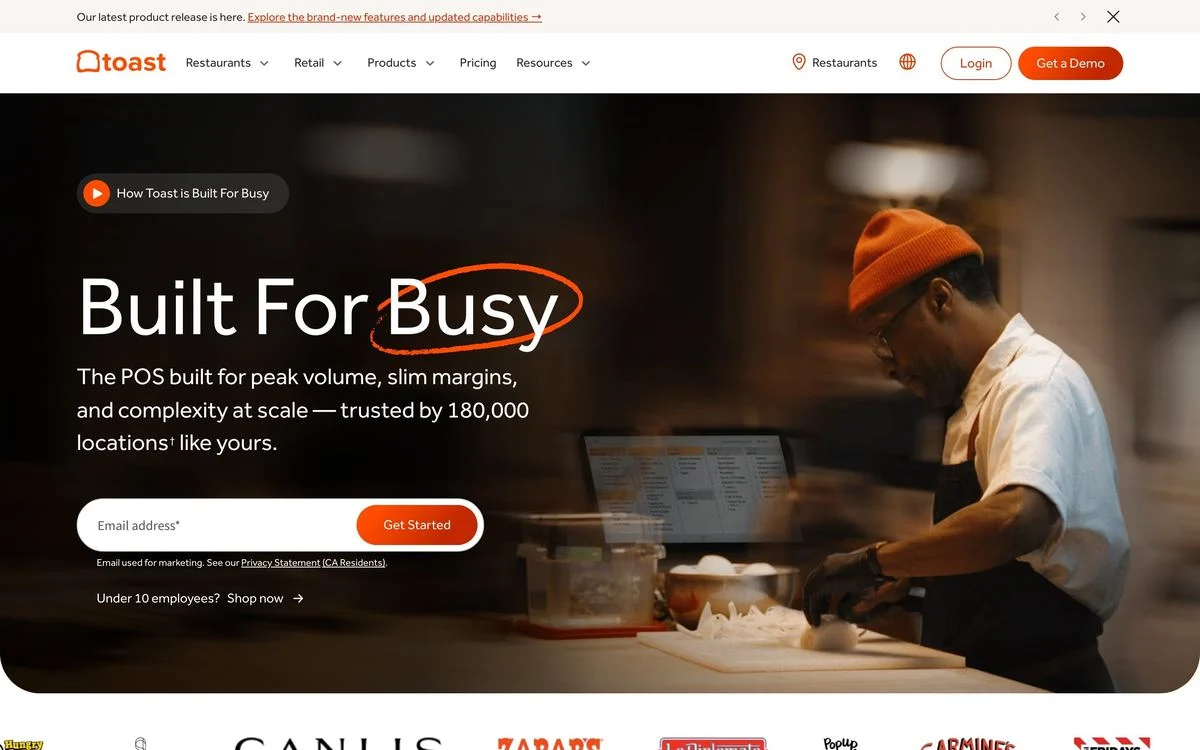
Example: Toast homepage
The value proposition: “Built For Busy.” Beneath it: “The POS built for peak volume, slim margins, and complexity at scale”, “trusted by 180,000 locations like yours.”
Broken down:
- Who: busy restaurants, “locations like yours”.
- What: a point-of-sale system.
- Outcome: handling peak volume and slim margins.
- Proof: 180,000 locations.
Steal this: Name your customer’s hardest moment. “Peak volume, slim margins” is a restaurant owner’s Friday night.
14. Wise
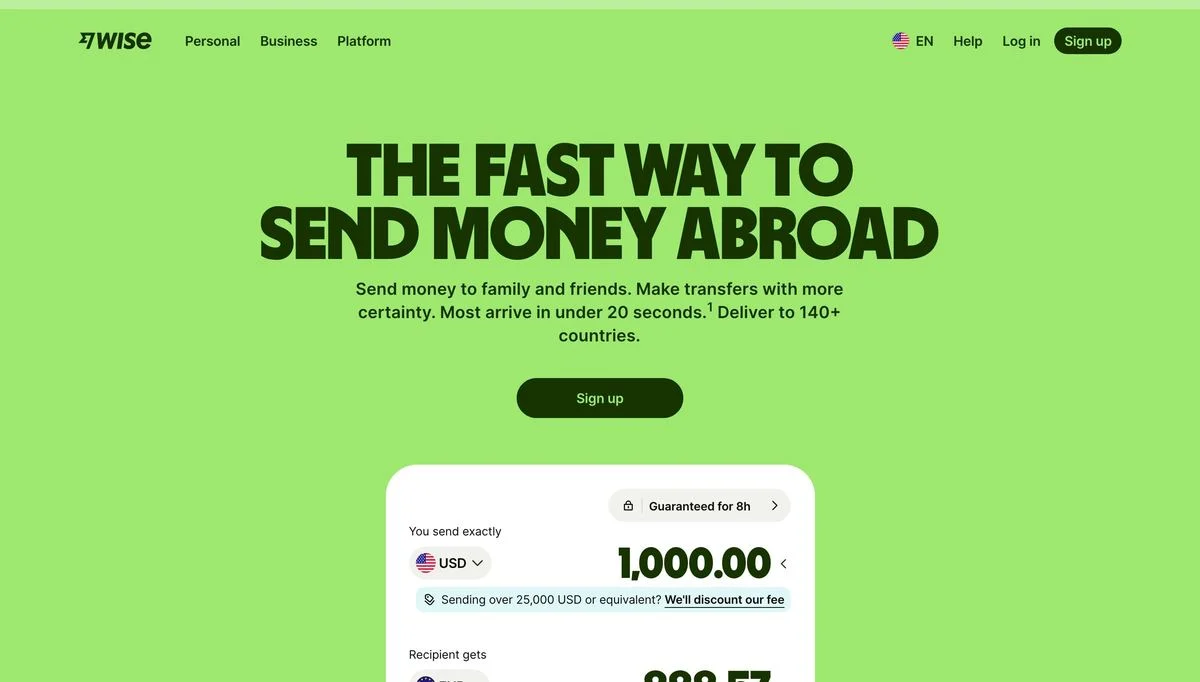
Example: Wise homepage
The value proposition: “The fast way to send money abroad.” Beneath it: “Send money to family and friends. Make transfers with more certainty. Most arrive in under 20 seconds. Deliver to 140+ countries.”
Broken down:
- Who: people sending money to family and friends abroad.
- What: international money transfers.
- Outcome: fast transfers with more certainty.
- Proof: “under 20 seconds” and “140+ countries”.
Steal this: If your claim is speed, give the time. “Fast” is a promise; “under 20 seconds” is a fact.
15. DoorDash
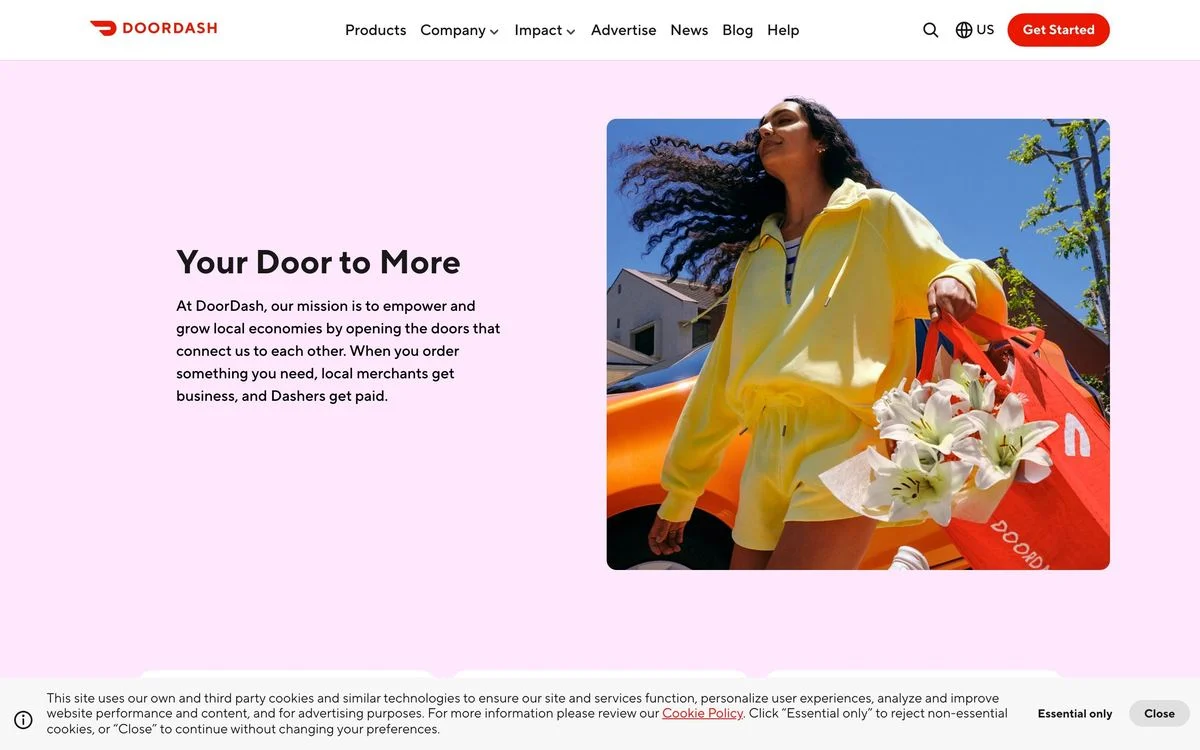
Example: DoorDash company page
The value proposition: “Your Door to More.” Beneath it, the mission: to empower and grow local economies, so that when you order something you need, local merchants get business and Dashers get paid.
Broken down:
- Who: three groups at once: customers, merchants and Dashers.
- What: local delivery, implied.
- Outcome: each group gets something from every order.
- Proof: none in the hero.
Steal this: If your business has more than one side, show what each side gets in one sentence.
16. Deel
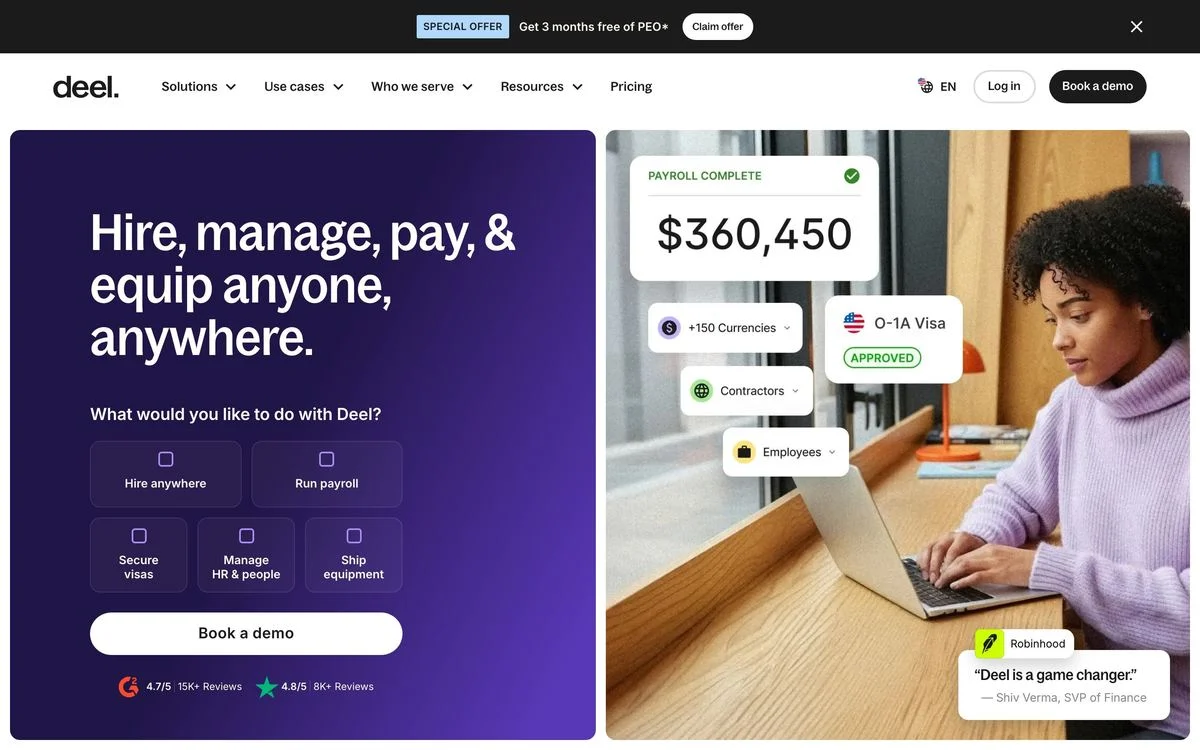
Example: Deel homepage
The value proposition: “Hire, manage, pay, & equip anyone, anywhere.” Beneath it, a chooser: “What would you like to do with Deel?”, with options to hire, run payroll, secure visas, manage HR and ship equipment.
Broken down:
- Who: companies with people in other countries.
- What: global HR and payroll.
- Outcome: hire and pay anyone, anywhere.
- Proof: review ratings beneath the chooser.
Steal this: “Anyone, anywhere” sets the scope in two words. Say how wide your product reaches.
17. Okta
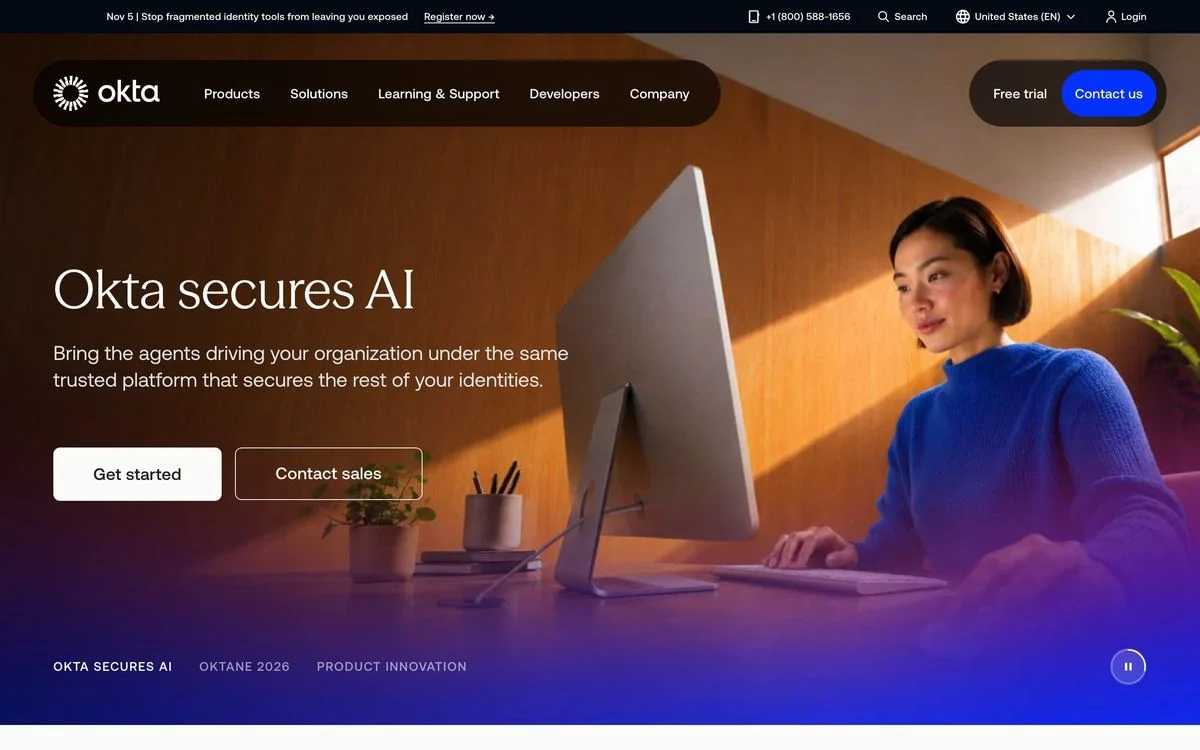
Example: Okta homepage
The value proposition: “Okta secures AI.” Beneath it: “Bring the agents driving your organization under the same trusted platform that secures the rest of your identities.”
Broken down:
- Who: organizations, and the security teams that run identity.
- What: an identity platform.
- Outcome: AI agents secured the same way as people.
- Proof: none in the hero beyond “trusted”.
Steal this: If customers already trust you for one thing, extend that trust to the new thing in the same sentence.
18. Slack
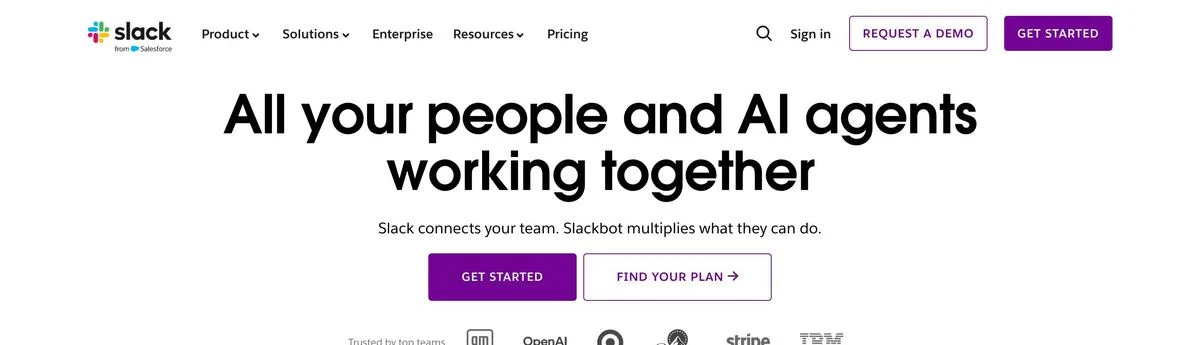
Example: Slack homepage
The value proposition: “All your people and AI agents working together.” Beneath it: “Slack connects your team. Slackbot multiplies what they can do.”
Broken down:
- Who: your team.
- What: a place where people and AI agents work together.
- Outcome: a team that gets more done.
- Proof: a customer logo strip beneath the buttons.
Steal this: Two short sentences, one for each half of the product, can do more than one long one.
Value propositions that lead with the difference
19. Mercury
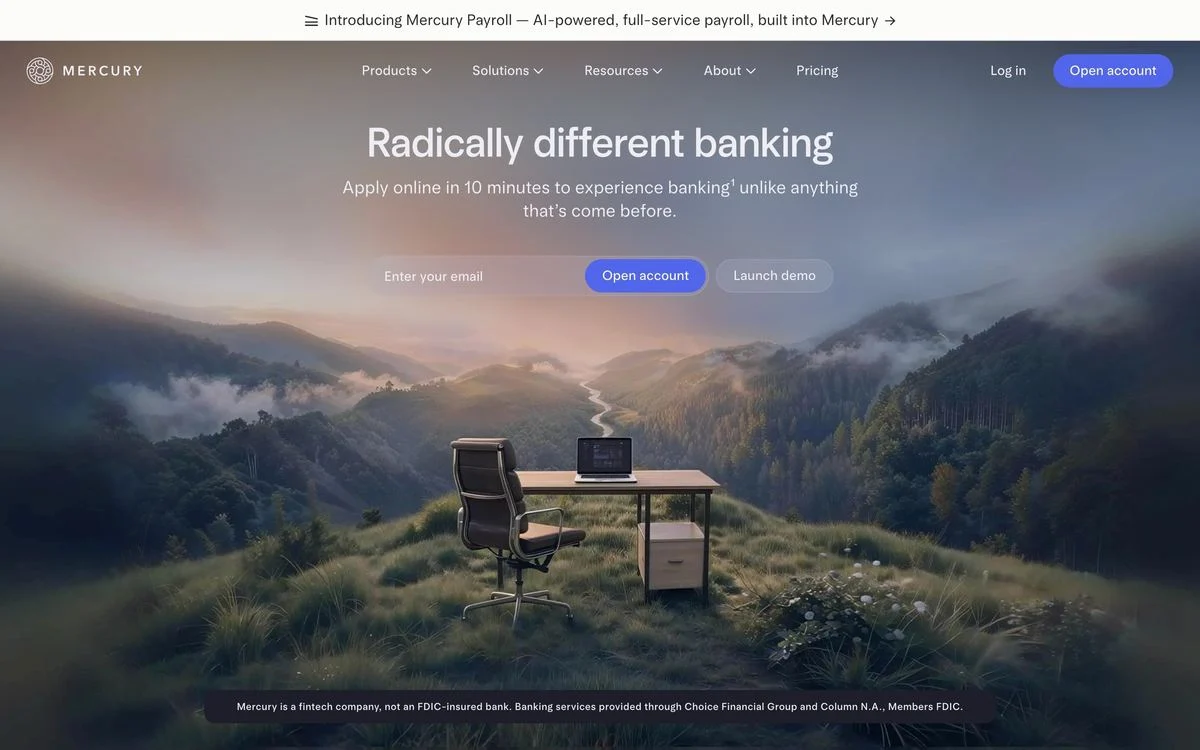
Example: Mercury homepage
The value proposition: “Radically different banking.” Beneath it: “Apply online in 10 minutes to experience banking unlike anything that’s come before.”
Broken down:
- Who: businesses, implied.
- What: banking.
- Outcome: a better banking experience.
- Difference: “radically different” and “unlike anything that’s come before”, backed by “10 minutes”.
Steal this: If you claim to be different, give one concrete example right away. “Apply online in 10 minutes” is what makes “radically different” believable.
20. Intercom
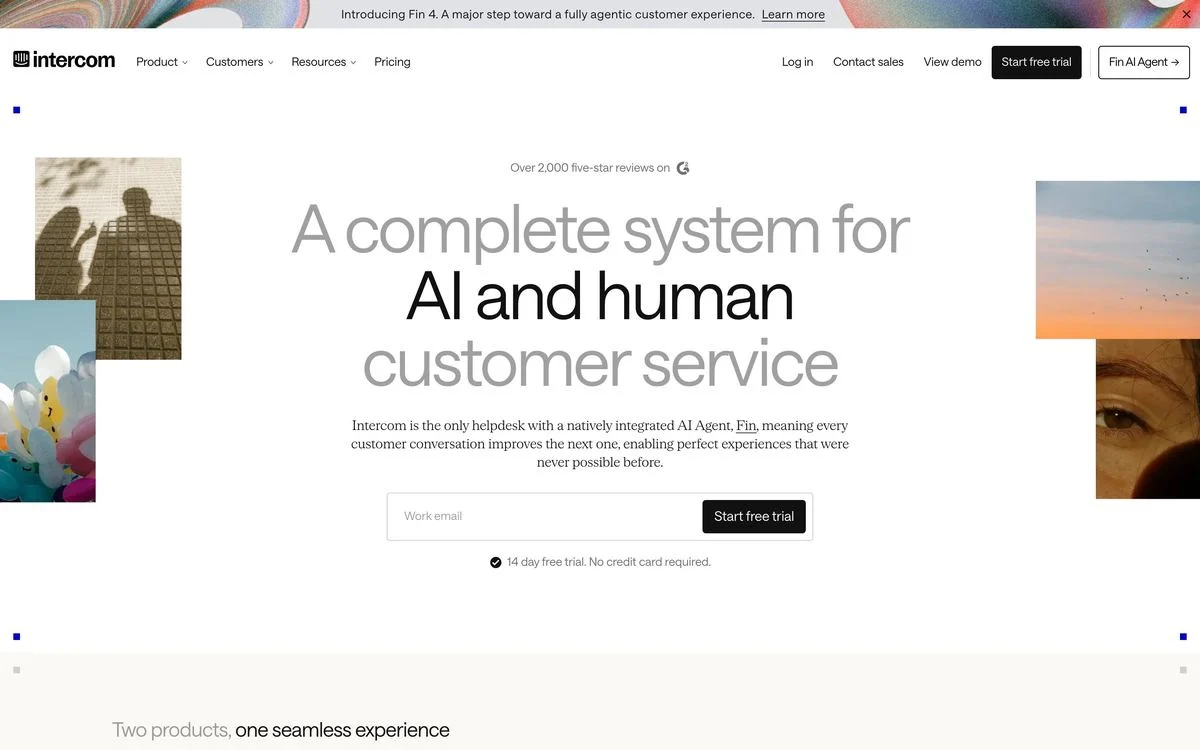
Example: Intercom homepage
The value proposition: “A complete system for AI and human customer service.” Beneath it: “Intercom is the only helpdesk with a natively integrated AI Agent, Fin, meaning every customer conversation improves the next one.” Above the headline: “Over 2,000 five-star reviews” on G2.
Broken down:
- Who: customer service teams.
- What: a helpdesk.
- Outcome: each conversation improves the next.
- Difference: “the only helpdesk with a natively integrated AI Agent”, plus the review count.
Steal this: If you can say “the only”, say what you are the only one to do, and why it matters to the customer.
What the best value propositions have in common
- They are specific about one thing. Toast’s busy Friday night, Wise’s 20 seconds, Vanta’s list of standards. Specific beats complete.
- They back the claim with a number. Half of these 20 show one, from Zendesk’s “up to 80%” to Stripe’s live counter.
- They use two lines, not one. The headline makes the promise and the line beneath explains it. Almost every example here splits the job that way.
- They pair AI with an outcome. Twelve mention AI. The memorable ones, like Zendesk and Calendly, say what the AI does for you.
- They rarely claim to be unique. Only Mercury and Intercom make an “unlike anything” or “the only” claim, and both back it up immediately.
How to write a value proposition
A simple template many marketers use comes from Geoffrey Moore’s positioning statement in Crossing the Chasm: for a specific customer, who has a specific need, your product is a category that delivers a key benefit, unlike the main alternative.
To turn that into website copy:
- Write the four parts separately: who, what, outcome, proof.
- Pick the one that matters most to your buyer and make it the headline.
- Put the rest in the line beneath, in plain words.
- Add one number or proof point to the hero.
- Read it to someone who has never heard of you. If they cannot say who it is for and what it does, rewrite it.
- Test it. A value proposition is a guess until visitors respond to it.
Value propositions are among the easiest things on a site to test, because a single line changes the whole page. A/B testing your hero copy shows which version people respond to. With Ploy’s AI landing page builder, a new variant of your hero is a chat instruction against your existing brand components. For the rest of the first screen, see our hero section examples.
Put your value proposition on your site
Start from your current homepage in Ploy, then rewrite the first screen around the outcome your buyers want.