A homepage headline is the one piece of copy everybody reads and almost nobody tests.
It sits at the top of the most expensive page you own, it is the first sentence a buyer repeats to a colleague, and in most companies it was written once, in a hurry, by whoever happened to be free. Then it stays there for three years.
So we collected the hero headline from 40 well-known sites, counted the words in each one, and sorted them by what they are actually doing. Not whether they are clever — whether they tell you anything.
The short version: the median headline is six words long, almost none contain a number, and barely a sixth of them talk to you directly. What the good ones have in common is not style. It is that they commit to one job.
Build your next homepage headline in Ploy.
How we collected these
Every headline below was read off the rendered homepage at 1440 × 900 on 5 October 2026, not pulled from a meta tag. Where a page’s visual headline differs from its HTML h1 — which happened more than once — we used what a visitor actually sees.
Four sites were excluded for a reason worth knowing: their headlines rotate. Gong, Checkr, Snowflake and Headspace all swap their hero line between loads or animate between two states, so there is no single headline to quote. If you are copying a competitor’s headline, load their homepage twice before you assume you have it.
Three more were dropped because they have no hero headline at all. Airbnb opens straight into a search field, and its only h1 is the accessibility label “Airbnb homepage”.
What the 40 showed:
| What we counted | Result |
|---|---|
| Median headline length | 6 words |
| Headlines of five words or fewer | 15 of 40 |
| Headlines of ten words or more | 2 of 40 |
| Headlines mentioning AI or agents | 14 of 40 |
| Headlines containing a number | 1 of 40 |
| Headlines addressing the reader as “you” | 7 of 40 |
Two of those rows deserve a pause.
Fourteen of forty now mention AI or agents. That is more than a third of the set, and it includes companies in procurement, observability, home-services software and password management. Whatever you think of it, the category line has moved, and a headline written in 2023 now reads as dated whether or not the product changed.
Only seven of forty say “you”. Every copywriting guide ever written tells you to address the reader. The most recognisable brands on the internet mostly do not — they name the thing instead and let the reader place themselves.
All 40 headlines
| Brand | Hero headline | Words |
|---|---|---|
| Zip | AI for procurement | 3 |
| Datadog | AI-Powered Observability and Security | 4 |
| ServiceTitan | AI software for commercial and residential trades | 7 |
| Figma | The full-stack creative canvas | 4 |
| Linear | The product development system for teams and agents | 8 |
| Ramp | Time is money. Save both. | 5 |
| Calendly | All the work around meetings, handled. | 6 |
| Dropbox | Get to work, with a lot less work | 8 |
| Grammarly | Think big. We’ll take care of the details. | 8 |
| Clay | Build systems to grow revenue | 5 |
| Faire | Find your next bestseller | 4 |
| Raycast | Your shortcut to everything. | 4 |
| Canva | What will you design today? | 5 |
| Brex | Finance built for speed and control. | 6 |
| Supabase | Build in a weekend. Scale to millions. | 7 |
| Asana | The only work management platform built for scale | 8 |
| Rippling | Manage your entire workforce on one system | 7 |
| Deel | Hire, manage, pay, & equip anyone, anywhere. | 7 |
| Cloudflare | Everything we learned from powering 20% of the Internet - yours by default | 13 |
| Loom | One video is worth a thousand words | 7 |
| Stripe | Financial infrastructure to grow your revenue. | 6 |
| Notion | Where teams and agents Create together. | 6 |
| Slack | All your people and AI agents working together. | 8 |
| 1Password | Secure access for every human and AI agent | 8 |
| Postman | API skills_ for your agents | 5 |
| Databricks | One database for AI, apps and agents | 7 |
| Miro | Human collaboration at the speed of AI | 7 |
| Vanta | Trust is everything | 3 |
| Mercury | Radically different banking | 3 |
| Oura | Subtle. Power. | 2 |
| Sierra | Better outcomes. Built on Sierra. | 5 |
| Atlassian | Discover the power of knowing | 5 |
| Scale | The world’s most important decisions need reliable AI systems. | 9 |
| Whoop | The wearable designed for lasting progress | 6 |
| Duolingo | The most fun way to learn languages, chess, and more! | 10 |
| Intercom | A complete system for human and AI customer service | 9 |
| Harvey | Build a Frontier Legal Organization | 5 |
| Plaid | Turn data into revolutionary financial products | 6 |
| Zapier | The world’s most connected AI platform | 6 |
| Twilio | The platform for conversations in the AI era | 8 |
The eight patterns
1. Name the category plainly
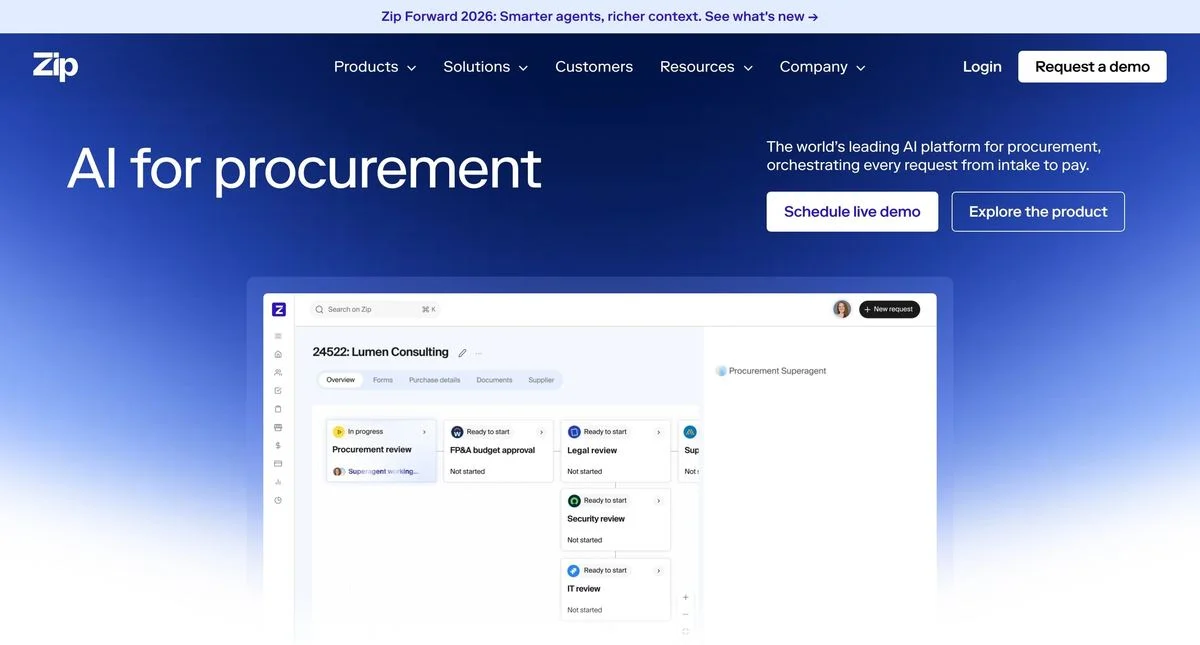
Example: Zip homepage — “AI for procurement”
Five of the forty do nothing but name the category: Zip, Datadog (“AI-Powered Observability and Security”), ServiceTitan (“AI software for commercial and residential trades”), Figma (“The full-stack creative canvas”) and Linear (“The product development system for teams and agents”).
This looks lazy and usually is not. It works when the visitor already knows they need the category and is only checking whether you are a serious option — procurement teams shopping for procurement software do not need to be sold the concept. Zip’s three words are the most efficient headline in the set.
It fails when nobody is searching for your category yet. If people do not know the thing exists, naming it tells them nothing.
2. Name the outcome
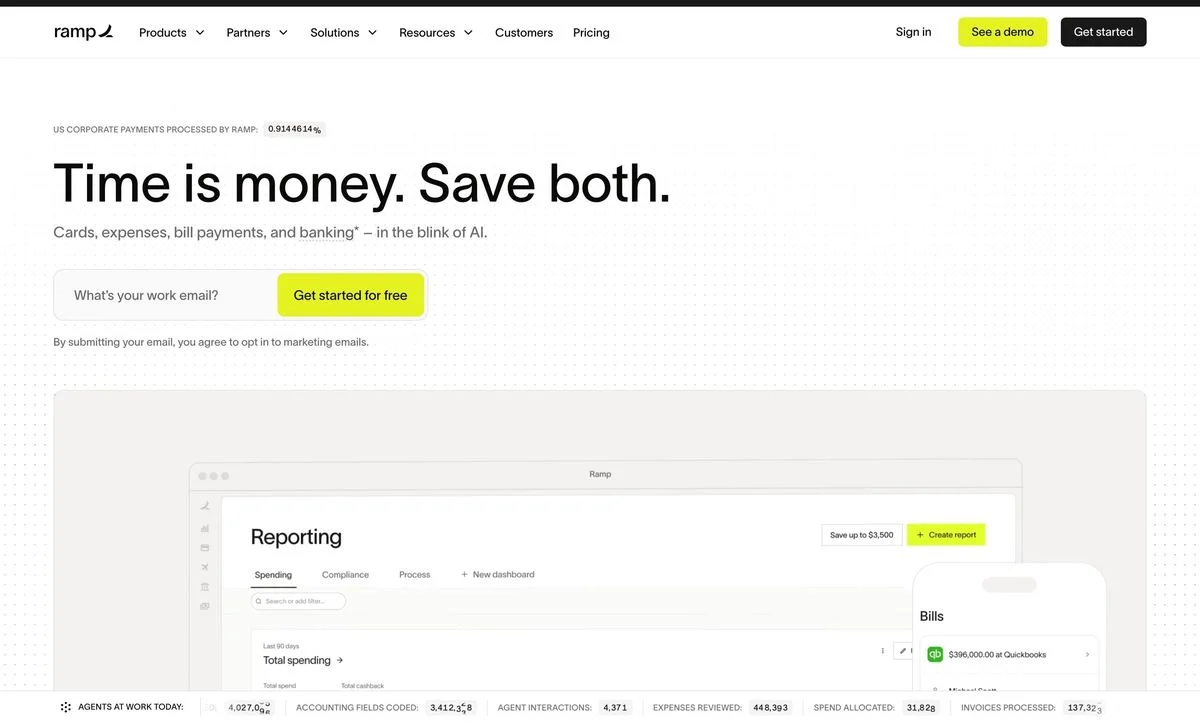
Example: Ramp homepage — “Time is money. Save both.”
The largest group, eight of forty. Ramp, Calendly (“All the work around meetings, handled.”), Dropbox (“Get to work, with a lot less work”), Grammarly (“Think big. We’ll take care of the details.”), Clay, Faire (“Find your next bestseller”), Raycast (“Your shortcut to everything.”) and Canva, which asks the outcome as a question: “What will you design today?”
What unites them is that none describes the software. They describe the state you are in afterwards. Calendly’s headline is a good test case — “All the work around meetings, handled” names the annoying part, not the calendar.
It fails when the outcome is generic. “Grow your business” is an outcome and it is worthless, because it is true of everything.
3. Name both sides of a tension
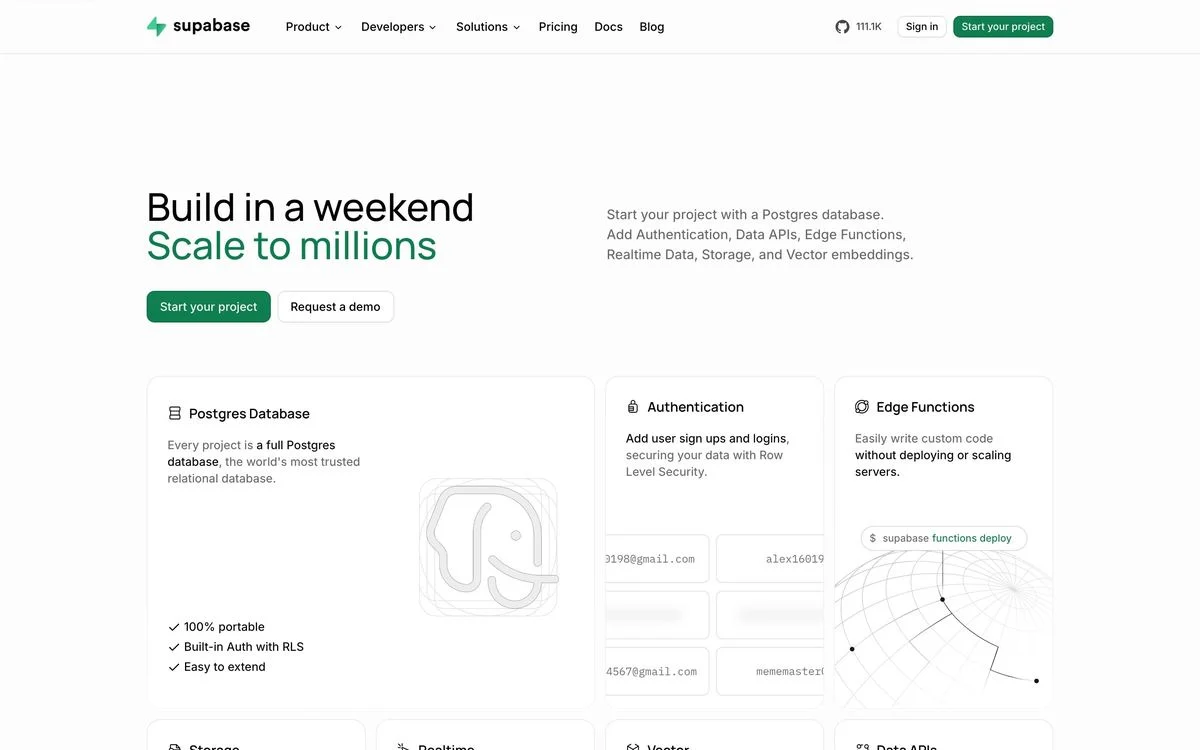
Example: Supabase homepage — “Build in a weekend. Scale to millions.”
Five do this: Supabase, Brex (“Finance built for speed and control.”), Asana (“The only work management platform built for scale”), Rippling (“Manage your entire workforce on one system”) and Deel (“Hire, manage, pay, & equip anyone, anywhere.”).
Supabase is the cleanest version. Its buyer has learned that fast-to-build tools fall over and robust tools take months, so the headline names both halves of that trade-off and claims both. Brex does the same thing for finance teams with speed and control.
This is the most useful pattern for a crowded category, because the tension is usually the reason people have not bought anything yet.
It fails if you cannot actually do both. This headline sets up the exact objection your sales team will spend the rest of the year answering.
4. Lead with proof
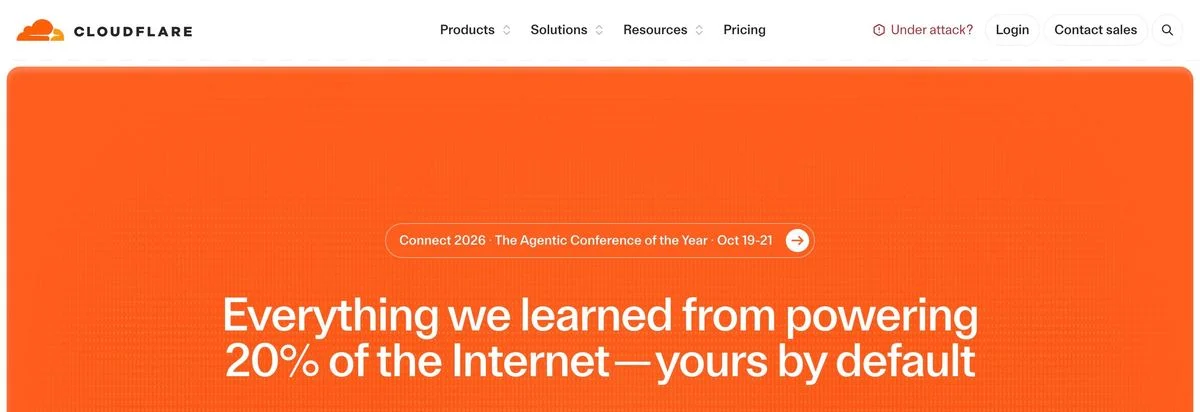
Example: Cloudflare homepage — “Everything we learned from powering 20% of the Internet — yours by default”
Only one headline in forty contains a number, and it is Cloudflare’s. At thirteen words it is also the longest in the set, and it earns the length: the number is the argument, and “yours by default” turns their scale into your benefit rather than their boast.
Loom’s “One video is worth a thousand words” borrows a number from a phrase everyone already knows, which is the cheapest possible version of this move. Stripe’s “Financial infrastructure to grow your revenue” carries its proof just above the headline instead — a live counter showing the share of global GDP running on Stripe.
It fails when the number is about you rather than the reader. “Trusted by 10,000 companies” is a fact; “powering 20% of the Internet — yours by default” is an offer.
Put a specific claim in your hero
Draft a headline and supporting copy in Ploy using your existing brand components.
5. Write for the buyer who just appeared
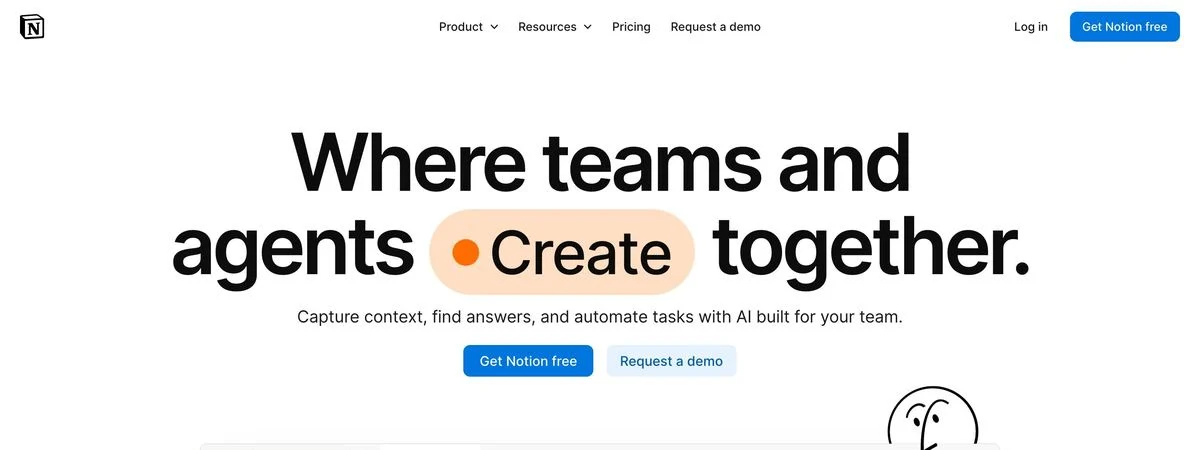
Example: Notion homepage — “Where teams and agents Create together.”
Six headlines put AI agents in the sentence as a user rather than a feature: Notion, Slack (“All your people and AI agents working together.”), 1Password (“Secure access for every human and AI agent”), Postman (“API skills_ for your agents”), Databricks (“One database for AI, apps and agents”) and Miro (“Human collaboration at the speed of AI”).
Notice the construction. These are not claiming to be AI products — they are claiming that something new now uses them. 1Password’s headline is the clearest example: the product did not change category, the population of things needing secure access did.
It fails as decoration. Adding “AI-powered” to an unchanged product is the 2026 equivalent of adding “cloud” in 2012, and buyers have already learned to discount it.
6. Go abstract, if you have earned it
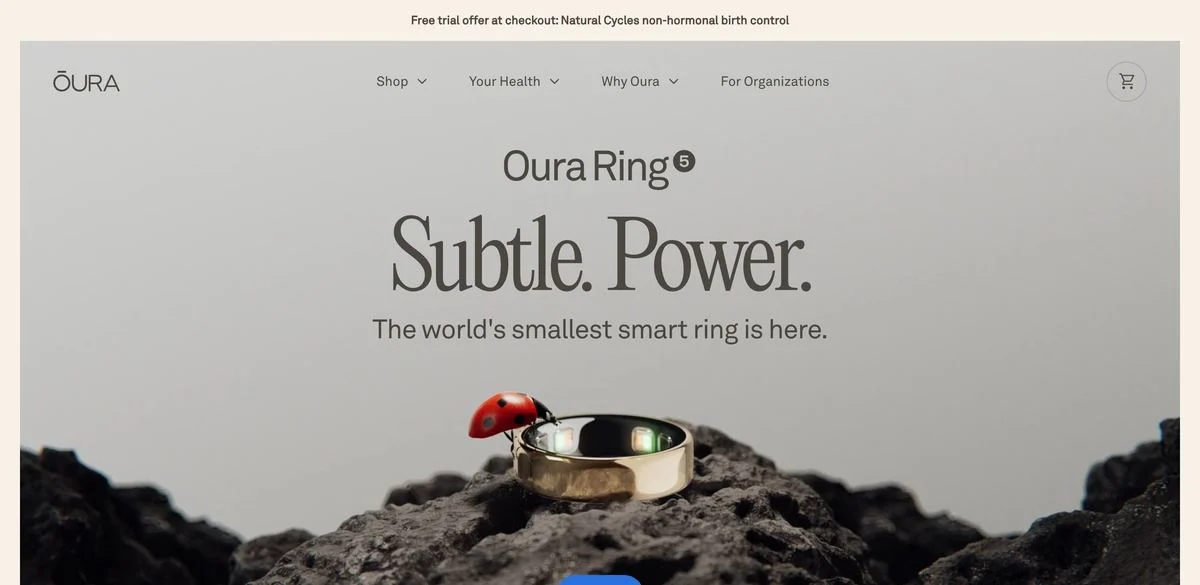
Example: Oura homepage — “Subtle. Power.”
Five headlines say nothing about what the product does: Oura’s two words, Vanta (“Trust is everything”), Mercury (“Radically different banking”), Sierra (“Better outcomes. Built on Sierra.”) and Atlassian (“Discover the power of knowing”).
Every one of them belongs to a company that already owns its category or has a product sitting in the frame. Oura can write “Subtle. Power.” because a photograph of the ring is directly underneath and the eyebrow says Oura Ring. Vanta can write “Trust is everything” because the line below does the work: 35+ compliance frameworks, automated and continuously monitored.
It fails for everyone else. An abstract headline from a company nobody has heard of is just a blank space where the explanation should be. This is the pattern most often copied by the companies least able to afford it.
7. Make one long, specific claim

Example: Scale homepage — “The world’s most important decisions need reliable AI systems.”
Four headlines run long and stay specific: Scale, Whoop (“The wearable designed for lasting progress”), Duolingo (“The most fun way to learn languages, chess, and more!”) and Intercom (“A complete system for human and AI customer service”).
Scale’s is an argument about stakes, aimed at government and defence buyers for whom reliability is the entire purchase. Duolingo’s does something quieter but smart — “and more!” is how a language company tells you it now teaches chess without rewriting its positioning.
It fails when length comes from hedging rather than precision. Nine words of qualifiers is not the same as nine words of specifics.
8. Reposition the category
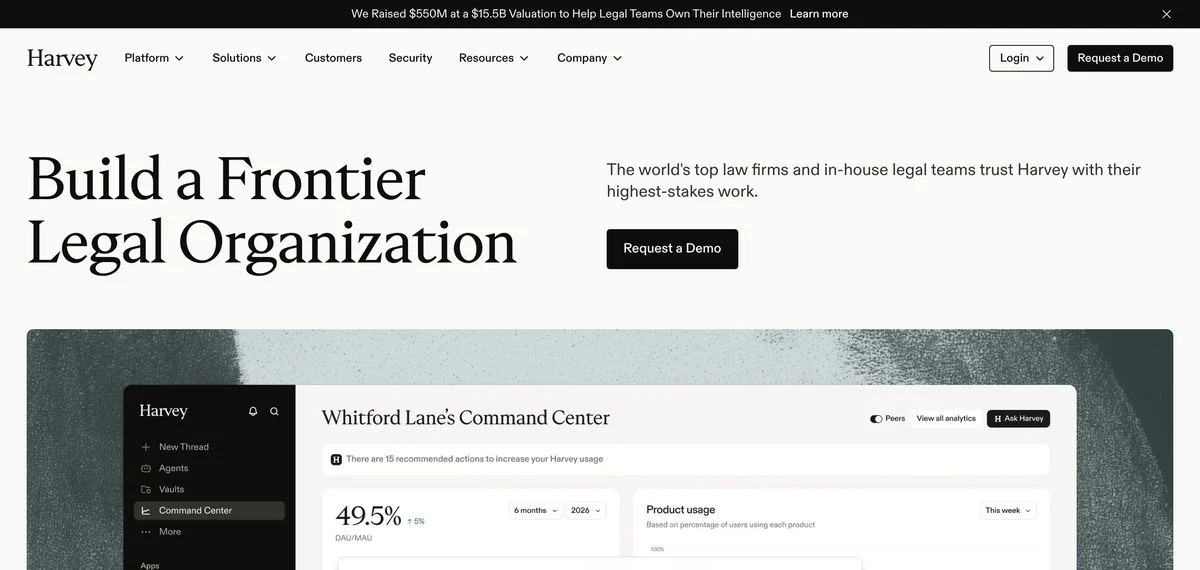
Example: Harvey homepage — “Build a Frontier Legal Organization”
Four headlines refuse the obvious category and name a bigger one: Harvey, Plaid (“Turn data into revolutionary financial products”), Zapier (“The world’s most connected AI platform”) and Twilio (“The platform for conversations in the AI era”).
Harvey could have written “AI for law firms”. Instead the headline sells an outcome a managing partner cares about and quietly moves the budget conversation from a software line item to a strategic one. Zapier’s is the boldest — a company known for connecting apps now claims the AI platform category outright.
It fails when the repositioning is aspirational rather than true. If the product cannot support the larger claim, the headline just makes the demo disappointing.
What the 40 have in common
- Six words is the centre of gravity. Fifteen of forty are five words or fewer; only two reach ten. If your headline is longer than nine words, it is probably two sentences fighting.
- They commit to one job. Every headline in this set is doing exactly one of the eight things above. The weak headlines we excluded along the way were the ones trying to name a category, promise an outcome and sound clever at once.
- Specificity beats address. Only seven say “you”. The rest name a thing precisely enough that the right reader recognises themselves in it.
- The subhead does the explaining. Vanta’s headline is three words; its subhead carries the number. Oura’s is two; the eyebrow names the product. Treat the two lines as one unit.
- Numbers are rare and therefore cheap to use. One headline in forty has a number in it. In a set of forty competitors, that is an open lane.
How to write yours
- Pick the job first. Category, outcome, tension, proof, new buyer, abstract, long claim, or reposition. Write for that one job.
- Draft it at six words. Write the version that fits, then decide if the extra words are specifics or hedging.
- Say it out loud to someone who does not work with you. If they cannot repeat it back, the committee reading your page will not either.
- Check whether you have earned abstraction. If a stranger could not tell what you sell from the headline and the picture, you have not.
- Write the subhead in the same sitting. The headline is allowed to be short because the subhead is there.
A headline is also the cheapest thing on your site to test and the hardest to get scheduled, because changing it usually means a developer. A/B testing the headline is where most homepage wins actually come from, and with Ploy’s AI landing page builder a variant is a chat instruction against your existing components rather than a ticket.
For the pages these headlines sit on, we have broken down 20 SaaS websites, 30 landing page examples and the website layouts that frame them.
Test the headline on your own homepage
Use Ploy to build a homepage variant around the category, outcome or proof your buyer needs.