Most companies put every campaign on the main website, where it competes with everything else.
A microsite takes one campaign, event, product or audience and gives it a small site of its own. It can have its own design, its own navigation and often its own domain. The best microsites below do one job and do it without the main site’s menu getting in the way.
We looked at 19 live microsites from Google, Spotify, Stripe, GitHub, Notion and others. For each one we noted what it is, where it lives (its own domain, a subdomain or a subfolder) and the job it does. Every example was checked on October 23, 2026.
The short version: most of these microsites are not on the company’s main domain. Eight of 19 use a different domain, four use a subdomain, and seven live in a subfolder of the main site.
Build a microsite in Ploy.
What is a microsite?
A microsite is a small website, usually a handful of pages or a single page, built for one specific purpose: a campaign, an event, a product launch, a piece of research or one audience. It usually has its own look and its own address, separate from the company’s main website.
Microsite vs landing page: a landing page is one page with one conversion goal, usually inside the main site. A microsite can have several pages and its own navigation, and it often has a job beyond one conversion, such as hosting an event or a body of research. For single pages, see our landing page examples.
Microsite vs website: the main website covers the whole company. A microsite covers one thing.
Where microsites live
| Where it lives | Example address | Count in this list |
|---|---|---|
| A different domain | stripesessions.com, fin.ai | 8 of 19 |
| A subdomain of the main domain | config.figma.com, press.stripe.com | 4 of 19 |
| A subfolder of the main site | linear.app/method, ramp.com/vendors | 7 of 19 |
Each choice has trade-offs:
- A different domain gives the microsite the most room to have its own brand, and a short address to say on stage. It also starts with no search history, and the links it earns point at that domain rather than the main site.
- A subdomain keeps the brand name in the address while giving the microsite its own space.
- A subfolder keeps everything on the main domain, so links and authority stay in one place. It is the easiest choice to maintain, and the one where the main site’s design and navigation most often creep in.
The rule of thumb: the more a microsite needs its own identity, the further from the main site it can live. Events and sub-brands tend to get their own domains. Research, methods and data tools tend to stay in a subfolder, where the links they earn help the whole site.
How we checked these 19
Each microsite was loaded in a desktop browser at 1440 × 900 on October 23, 2026. We recorded the headline, the address and anything that showed what the site is for. Microsites change often, especially event sites, so dates and headlines here reflect what was live that day.
Left out: Twilio SIGNAL and Netflix Tudum (a consent dialog covered the page), and Ramp’s AI Index (its summary changes weekly).
Campaign and annual microsites
1. Google Year in Search
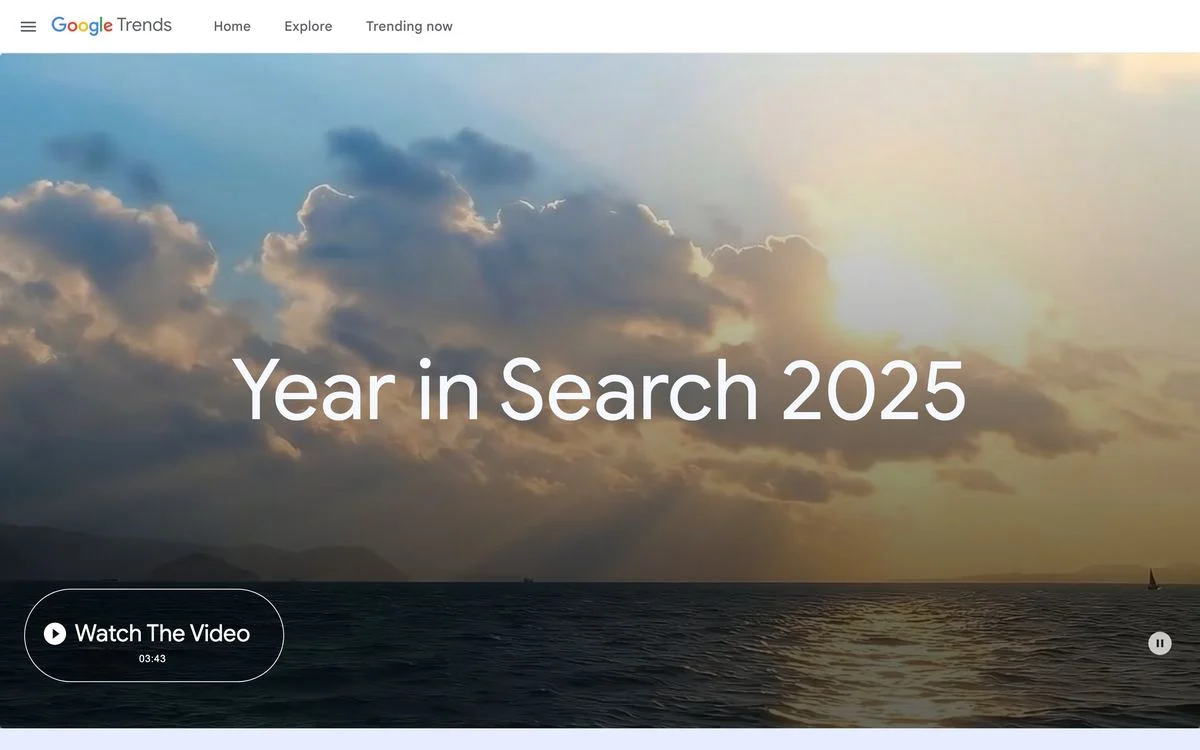
Example: Year in Search 2025
What it is: Google’s annual recap of what the world searched for, opening on a full-screen video and a single line: “Year in Search 2025”.
Where it lives: trends.withgoogle.com, a subdomain of withgoogle.com, a domain Google keeps for campaigns, not google.com.
The job it does: It turns Google’s own data into a story people share every December, and every year gets its own URL.
Steal this: Give a recurring campaign a dated URL. Each year’s version stays live and keeps collecting links.
2. Spotify Wrapped
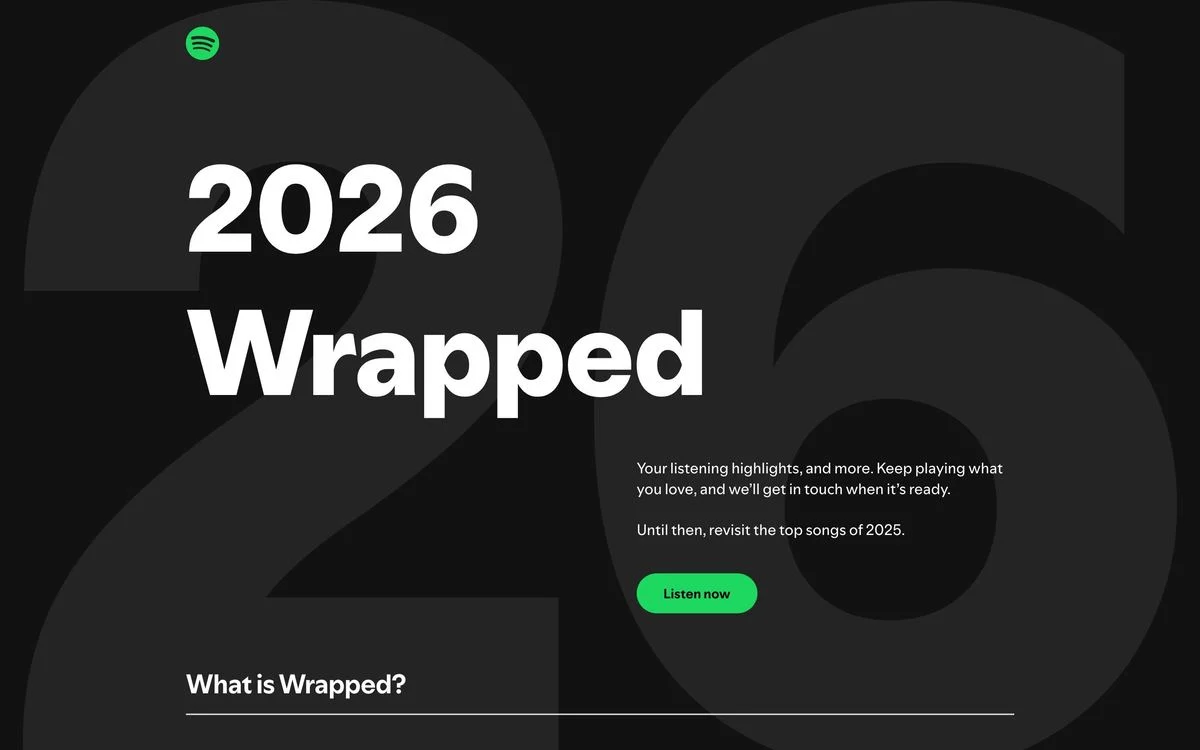
Example: Spotify Wrapped
What it is: The home of Spotify’s yearly listening recap. On October 23 it already read “2026 Wrapped”, with a note that Spotify will “get in touch when it’s ready” and a link to revisit the top songs of 2025.
Where it lives: A subfolder: spotify.com/us/wrapped.
The job it does: It keeps the campaign’s URL alive all year, so the page that will earn the December traffic is already indexed and linked.
Steal this: A seasonal microsite does not have to go dark between seasons. Keep the URL live with a teaser and last year’s highlights.
3. Stripe annual letter
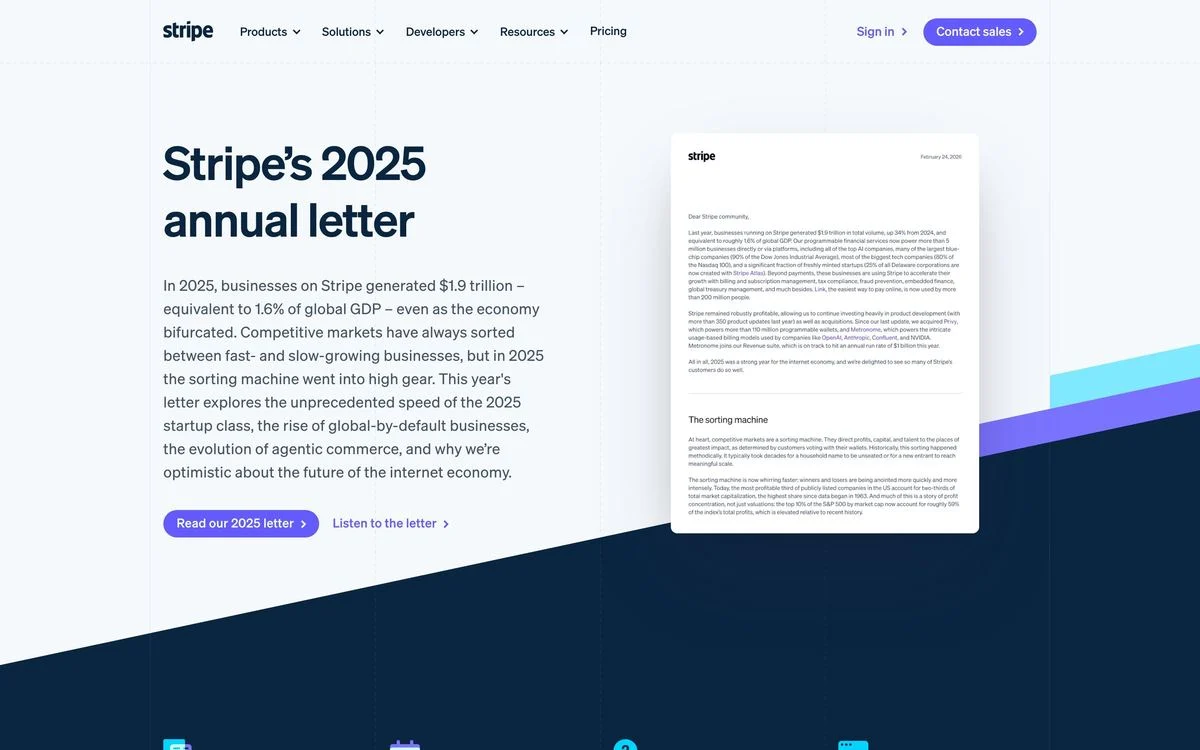
Example: Stripe’s 2025 annual letter
What it is: Stripe’s yearly letter on the state of the internet economy. The page opens with the headline figure: businesses on Stripe generated $1.9 trillion in 2025, about 1.6% of global GDP.
Where it lives: A subfolder: stripe.com/annual-updates/2025.
The job it does: It packages a long document as a page with one big number up front, plus a link to listen to the letter.
Steal this: Lead a report microsite with its single most quotable number. That is the line people will repeat.
4. Spotify Loud & Clear
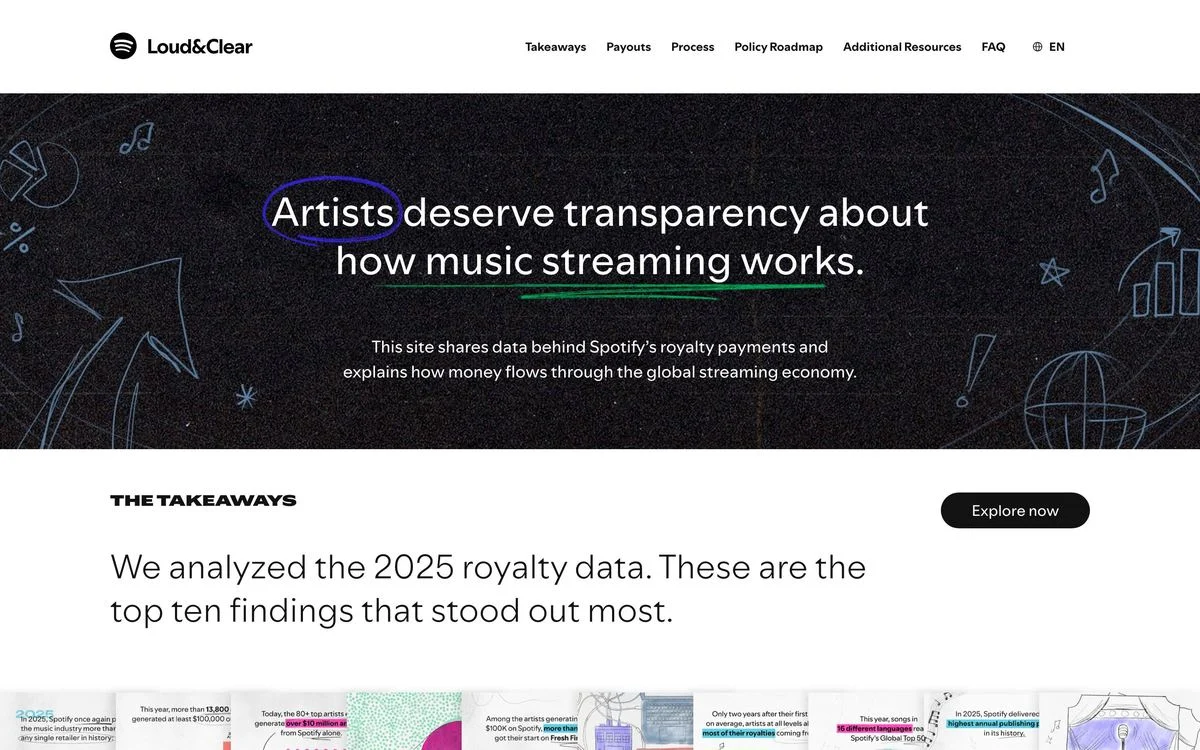
Example: Spotify Loud & Clear
What it is: A site for artists explaining how streaming royalties work. The headline: “Artists deserve transparency about how music streaming works.” Beneath it, the top ten findings from Spotify’s 2025 royalty data.
Where it lives: loudandclear.byspotify.com, on byspotify.com, a domain Spotify uses for sites aimed at specific audiences.
The job it does: It speaks to one audience, artists, about one topic, and keeps that conversation off the consumer homepage.
Steal this: When one audience needs a different conversation from your customers, give that audience its own site.
Event microsites
5. Figma Config

Example: Config by Figma
What it is: The site for Figma’s yearly conference, “for people who build products”. It leads with the date, May 25 to 27, 2027, and the venue, Pier 80 in San Francisco.
Where it lives: A subdomain: config.figma.com.
The job it does: Date, place and format are all above the fold. A visitor knows in two seconds whether they can go.
Steal this: Put the three facts an attendee needs, when, where and in person or online, in the first screen.
6. Stripe Sessions

Example: Stripe Sessions
What it is: Stripe’s conference site: “The internet economy conference”, May 4 to 6, 2027, at Moscone North and South in San Francisco, with a Register button in the top corner.
Where it lives: Its own domain: stripesessions.com.
The job it does: The event gets a domain short enough to say on stage and print on a badge.
Steal this: If an event is big enough to have a brand, give it a domain people can remember.
7. GitHub Universe
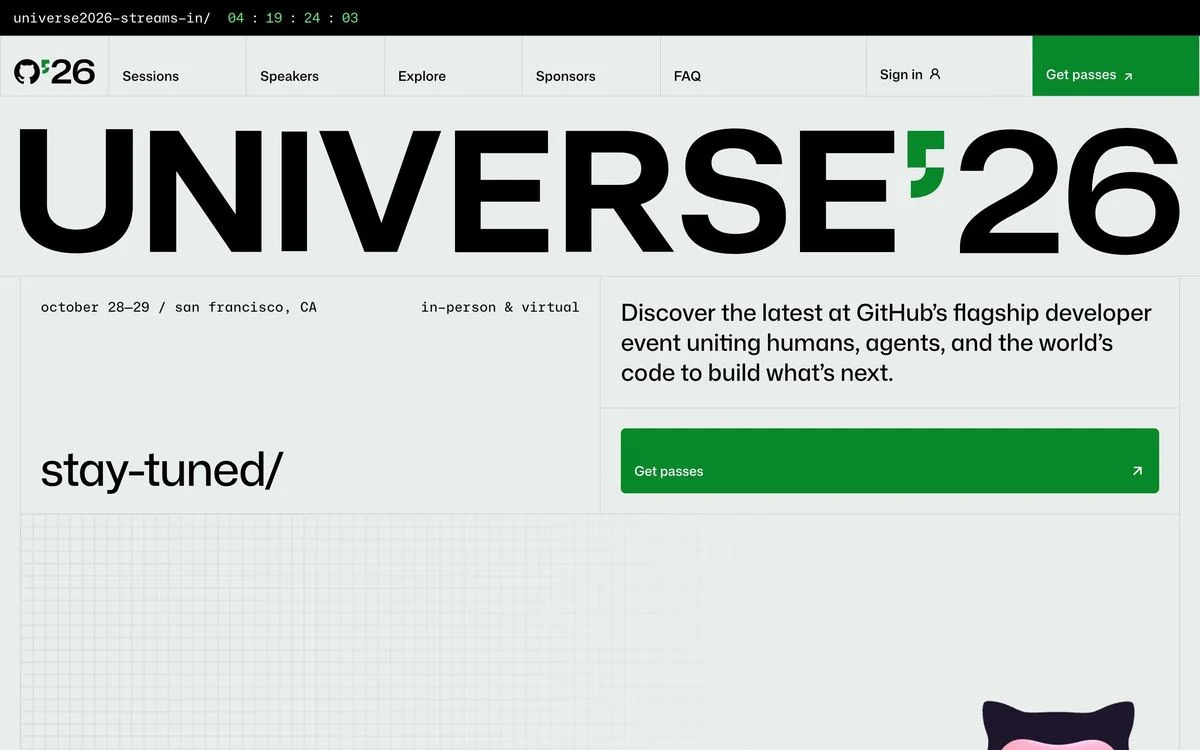
Example: GitHub Universe
What it is: GitHub’s developer conference, October 28 to 29, 2026, in San Francisco and online. A live countdown to the stream sits in the top bar.
Where it lives: Its own domain: githubuniverse.com.
The job it does: The countdown gives the page a reason to be checked again, and “Get passes” is the only green button.
Steal this: A countdown is the simplest way to make an event page feel live. Pair it with one clear call to action.
8. Clay Sculpt

Example: Sculpt by Clay
What it is: Clay’s go-to-market conference, “a one-day gathering of the most creative minds in GTM”. After the October 8, 2026 event, the hero switched to “Sculpt 2026 is a wrap” with a link to watch the recap.
Where it lives: A subdomain: sculpt.clay.com.
The job it does: It shows what an event microsite should do after the event: turn into the recap.
Steal this: Plan the post-event version before the event. The recap is what people find for the next eleven months.
9. Make with Notion

Example: Make with Notion
What it is: Notion’s launch site for its developer platform: “Developers: Join us on May 13.” with “A first look at our new developer platform” and a link to watch the keynote.
Where it lives: Its own domain: makewithnotion.com.
The job it does: It gave a launch its own stage, separate from Notion’s main site. Five months later, the headline still invited developers to a May 13 event.
Steal this: Set a date to update a launch microsite. A past date in the headline tells visitors the page has been left behind.
Give each campaign its own page
Ploy drafts focused microsite pages from your brand components, so each one stays on-brand without starting from a blank template.
Content and research microsites
10. Stripe Press

Example: Stripe Press
What it is: Stripe’s book publishing imprint. The homepage is a stack of book spines, including Poor Charlie’s Almanack, under the tagline “Ideas for progress”.
Where it lives: A subdomain: press.stripe.com.
The job it does: It gives Stripe a home for long-form ideas that would not fit on a payments website, and it looks nothing like one.
Steal this: A microsite can have its own design language. Stripe Press does not look like Stripe, and that is the point.
11. Basecamp Shape Up
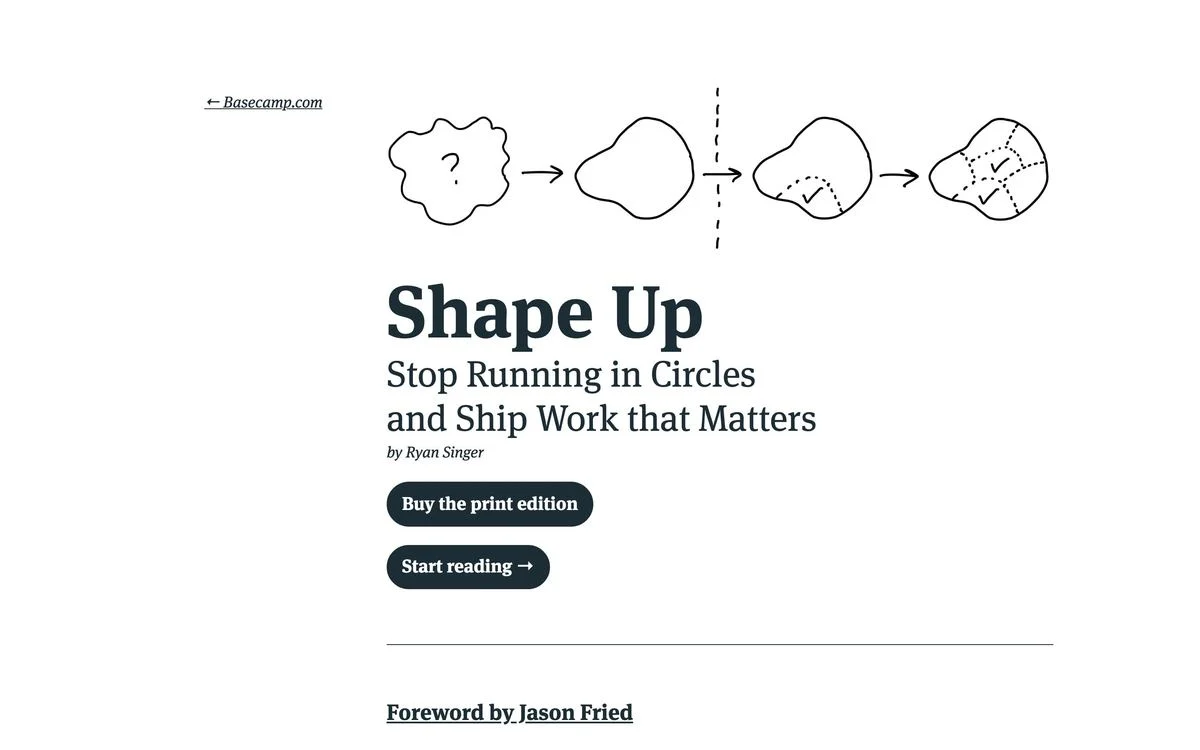
Example: Shape Up by Basecamp
What it is: A free online book by Ryan Singer on how Basecamp builds product, with a foreword by Jason Fried. Two buttons: “Buy the print edition” and “Start reading”.
Where it lives: A subfolder: basecamp.com/shapeup.
The job it does: It turns a company’s working method into a free resource that product teams read, link to and recommend.
Steal this: If your team has a method others ask about, write it up and publish it free on its own URL.
12. Linear Method
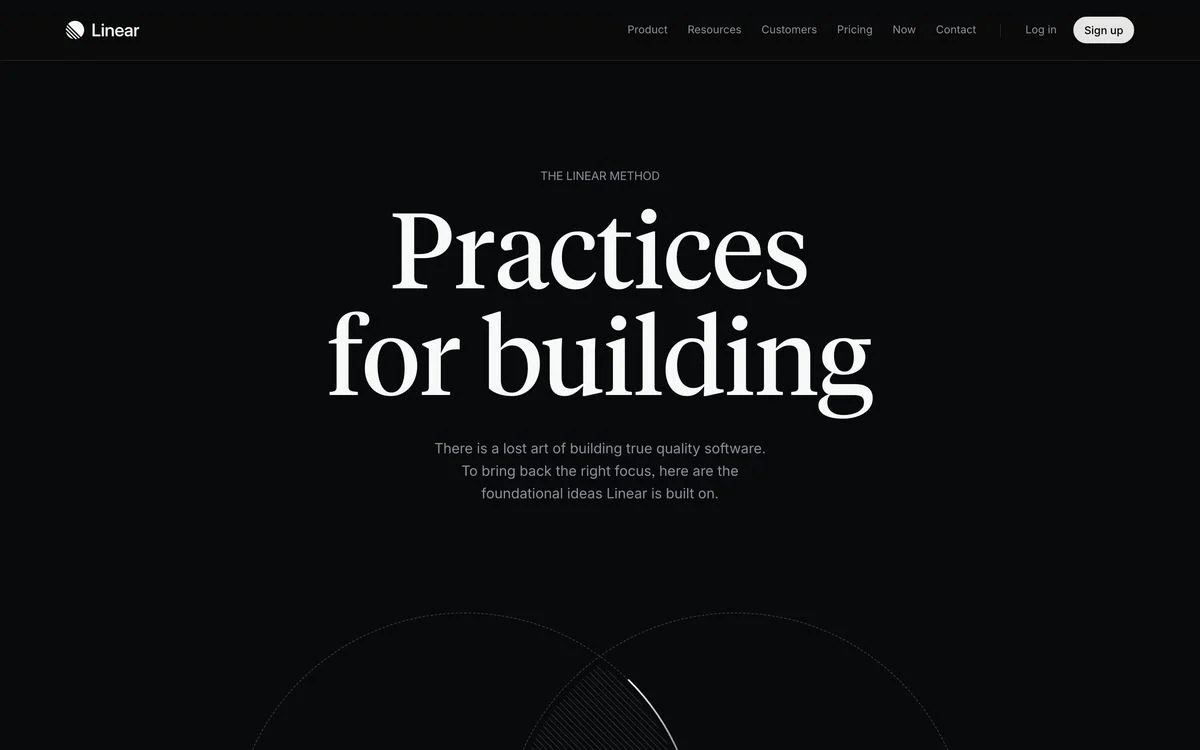
Example: The Linear Method
What it is: A short collection of principles for building software. It opens: “There is a lost art of building true quality software.”
Where it lives: A subfolder: linear.app/method.
The job it does: It explains the ideas the product is built on, which gives buyers a reason to choose Linear beyond features.
Steal this: A principles page says who your product is for better than a feature list can.
13. Slack Workforce Lab
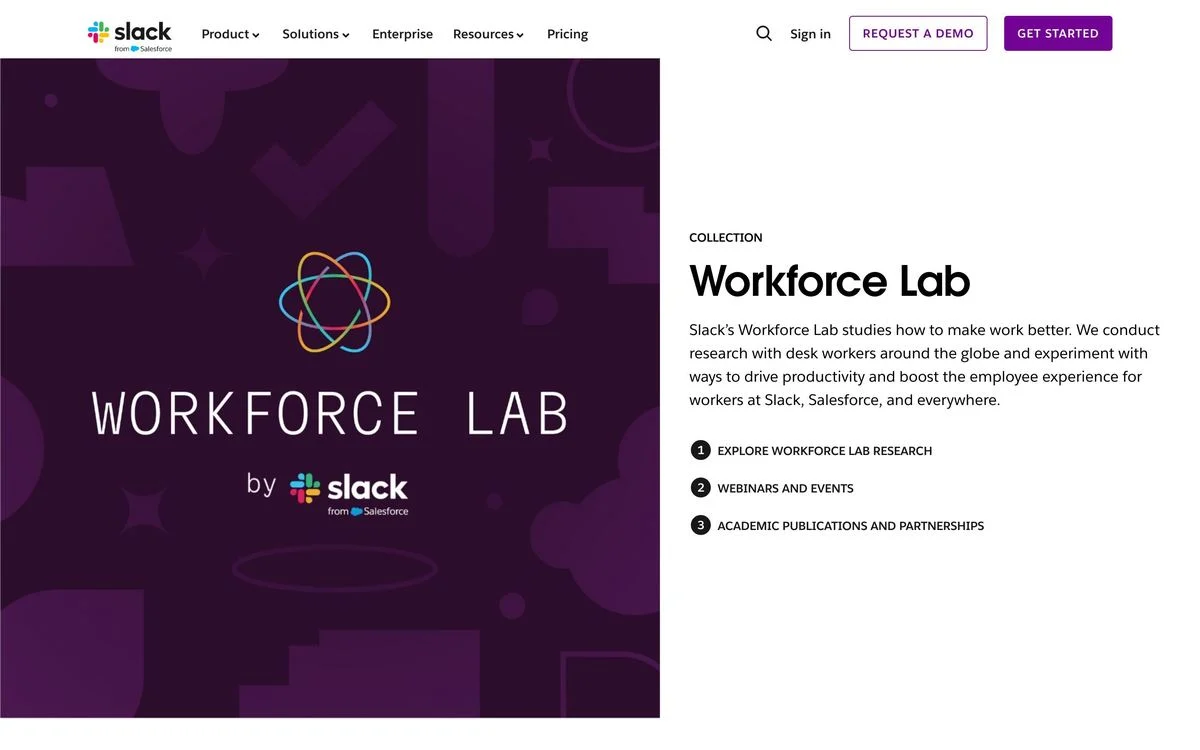
Example: Slack Workforce Lab
What it is: Slack’s research program on how to make work better, studying desk workers around the world. The page has its own logo, “Workforce Lab by Slack”.
Where it lives: A subfolder: slack.com/resources/collections/workforce-lab.
The job it does: It gives a research program a name and a home, so the findings can be cited as Workforce Lab rather than just Slack.
Steal this: Name your research. A named program gets cited by journalists far more easily than a company blog post.
14. Stripe Dot Dev
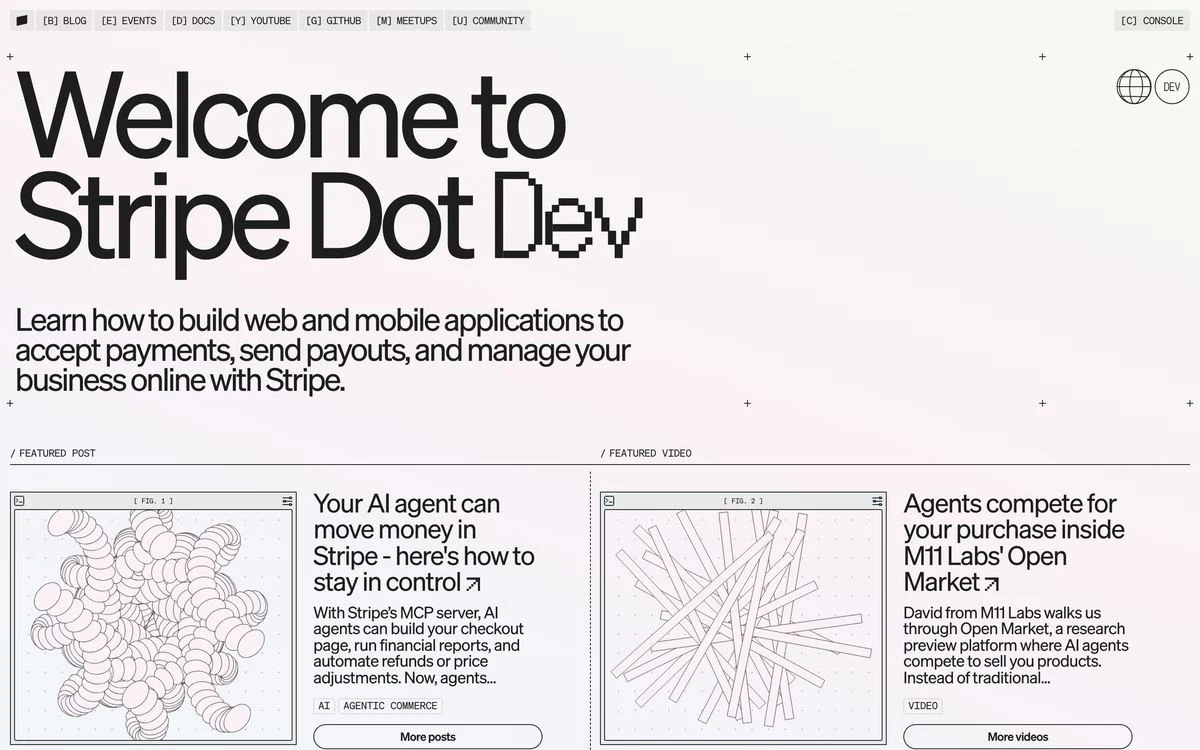
Example: stripe.dev
What it is: Stripe’s developer hub: “Welcome to Stripe Dot Dev”, with blog posts, videos, events and meetups for people building on Stripe.
Where it lives: Its own domain: stripe.dev.
The job it does: It speaks only to developers, with its own look, and leaves the main site free for buyers.
Steal this: If your product has a developer audience, a .dev domain tells them the site is for them.
Product and sub-brand microsites
15. Intercom Fin
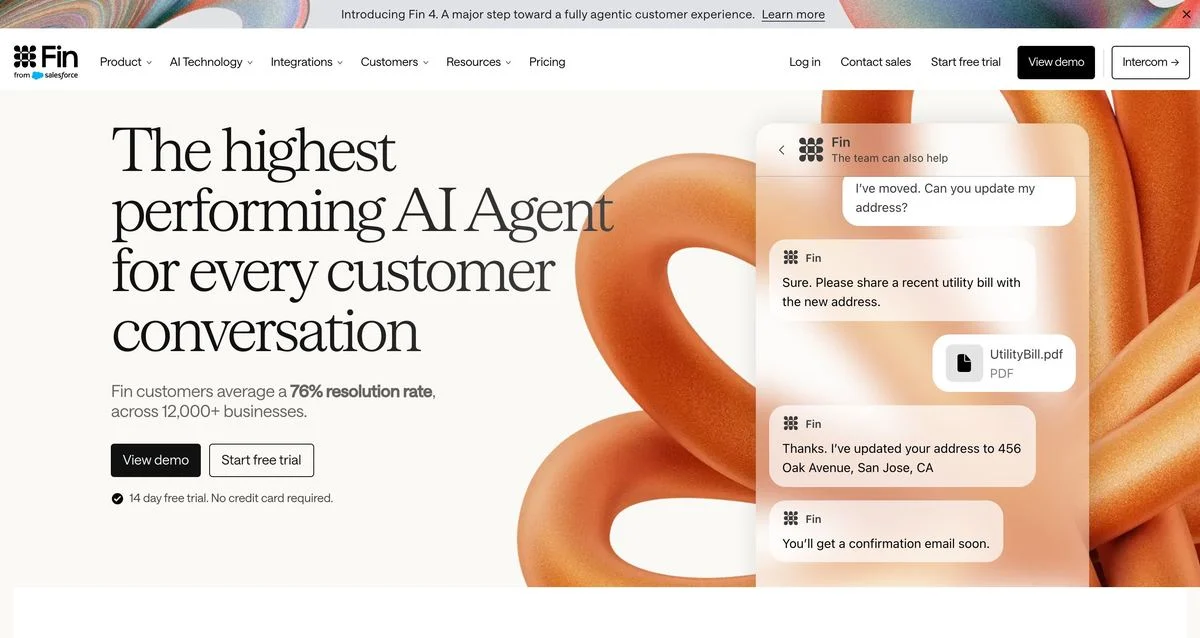
Example: Fin by Intercom
What it is: The site for Intercom’s AI agent: “The highest performing AI Agent for every customer conversation”. Beneath it: Fin customers average a 76% resolution rate across 12,000+ businesses.
Where it lives: Its own domain: fin.ai.
The job it does: It lets one product be marketed as a brand of its own, with its own proof, while still linking back to Intercom.
Steal this: When one product starts to sell on its own, test giving it its own site before a full rebrand.
16. Dropbox Dash
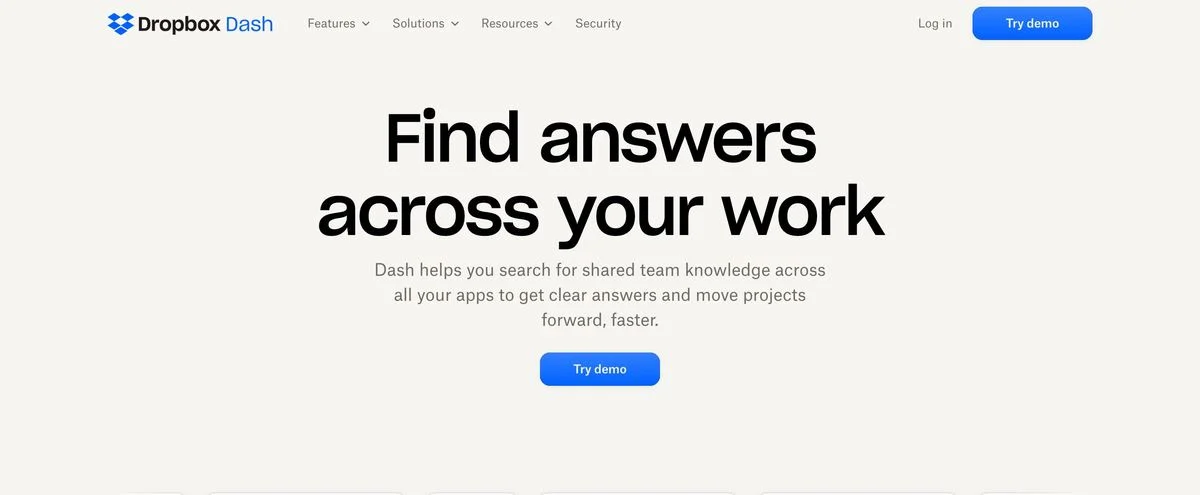
Example: Dropbox Dash
What it is: Dropbox’s AI search product: “Find answers across your work”. Beneath it, a strip of the apps Dash searches across.
Where it lives: A subdomain: dash.dropbox.com.
The job it does: It gives a new product its own focused site, with one button, “Try demo”, instead of the full Dropbox navigation.
Steal this: A new product launch can live on a subdomain with one call to action until it is ready for the main site.
17. 37signals ONCE
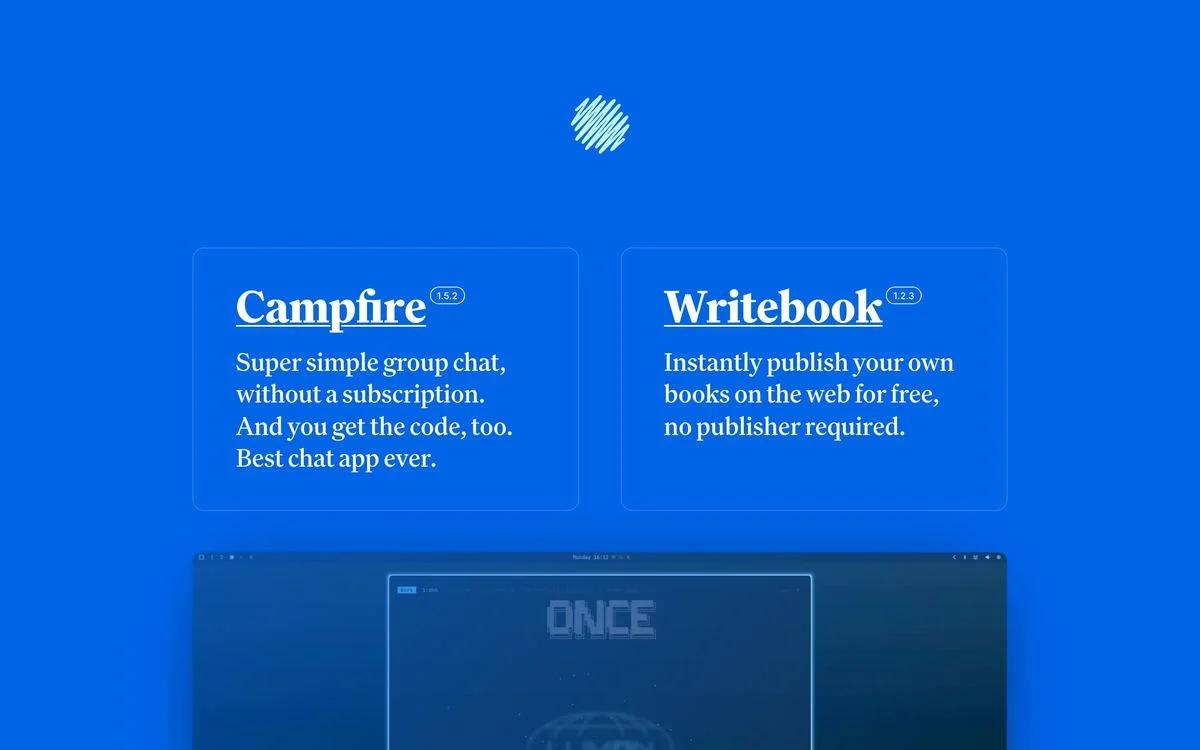
Example: ONCE by 37signals
What it is: A product line of apps you buy once and run yourself. The homepage is two cards: Campfire, “Super simple group chat, without a subscription”, and Writebook, for publishing books on the web for free.
Where it lives: Its own domain: once.com.
The job it does: The domain name is the pitch: pay once, no subscription.
Steal this: If your offer is the idea, consider a domain that says it.
Data and proof microsites
18. Ramp Rate
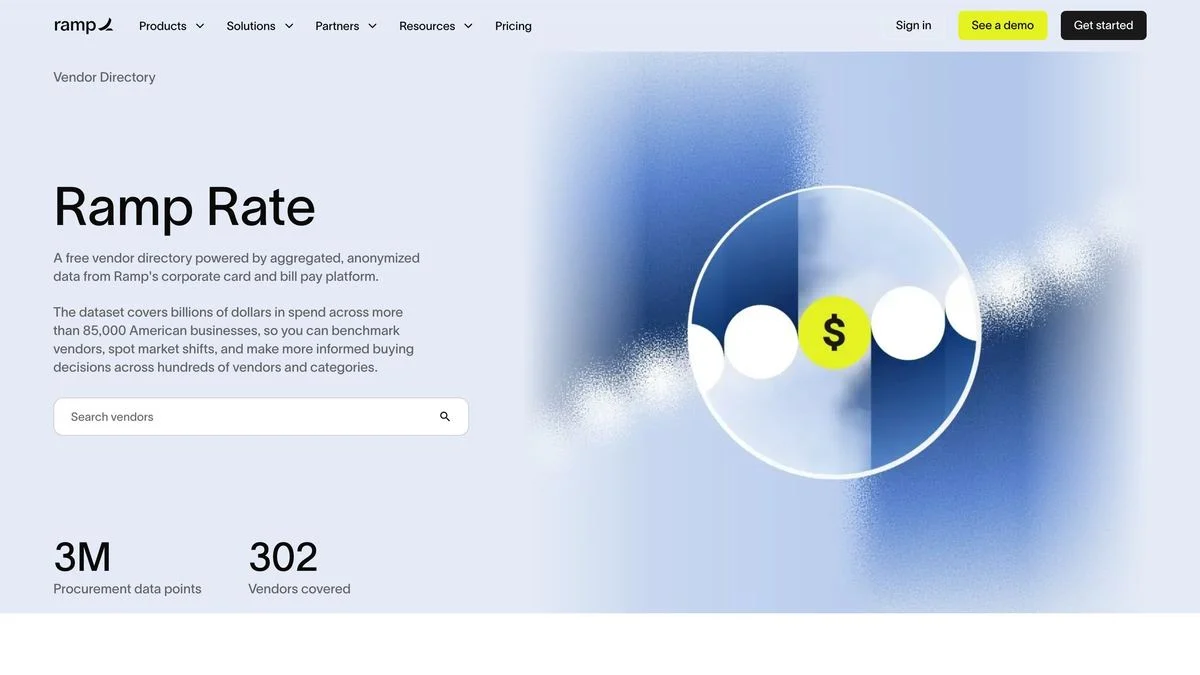
Example: Ramp Rate
What it is: A free vendor directory built on anonymized data from Ramp’s corporate card and bill pay platform. The hero counts 3M procurement data points and 302 vendors covered.
Where it lives: A subfolder: ramp.com/vendors.
The job it does: It turns Ramp’s own data into a free tool that buyers search for and come back to.
Steal this: If your product produces useful data, a free tool built on it is a microsite that earns its traffic.
19. Duolingo Efficacy
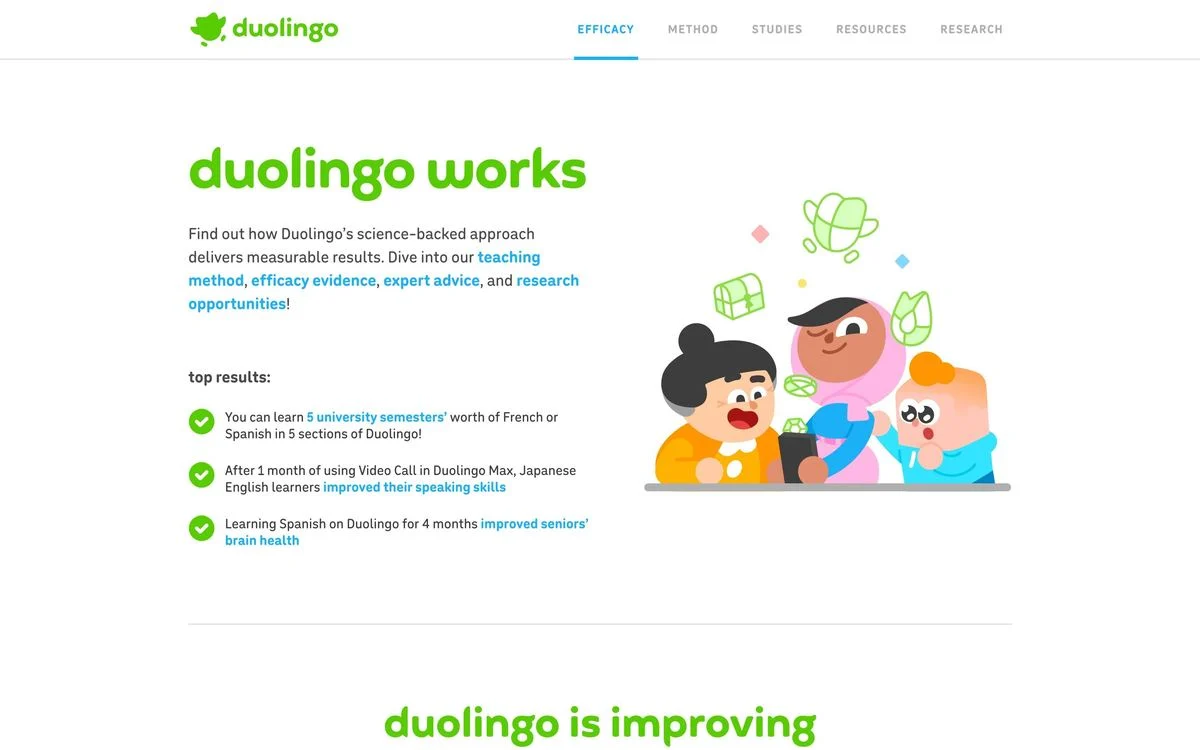
Example: Duolingo Efficacy
What it is: Duolingo’s evidence site: “duolingo works”. Top result listed: you can learn 5 university semesters’ worth of French or Spanish in 5 sections of Duolingo.
Where it lives: A subfolder: duolingo.com/efficacy, with its own navigation: Efficacy, Method, Studies, Resources, Research.
The job it does: It answers the skeptic’s question, does this actually work, with a whole site instead of one line.
Steal this: If buyers doubt your results, build a proof site with its own navigation, not just a testimonials section.
What the best microsites have in common
- They do one job. An event, a report, a product, a proof point. None of these tries to be a second homepage.
- They put the essentials in the first screen. Config and Stripe Sessions show the date and place before anything else.
- They plan for after the moment. Sculpt turned into a recap, Wrapped stays live with a teaser, and Year in Search keeps every year at its own URL. Make with Notion shows what happens when nobody updates the page.
- They choose an address on purpose. Brands and events get domains. Research and tools stay close to the main site.
- They often look different from the main site. Stripe Press, Config and Workforce Lab all have their own visual identity.
How to build a microsite
- Write down the one job. Register for the event, read the report, try the product. If you have two jobs, you may need two pages.
- Choose where it lives. A separate domain for a brand or event, a subfolder for research and tools you want to help the main site rank.
- Put the essentials in the first screen: what it is, who it is for, and the one action.
- Keep the navigation short, or remove it. A microsite should not carry the main site’s whole menu.
- Plan the after. Decide now what the page becomes when the event ends or the campaign is over.
- Measure it on its own. Track the microsite’s visits and conversions separately so you know whether it earned its place.
Microsites are where a team can try something new without touching the main site. With Ploy’s AI landing page builder, a campaign page or event site can be built from a chat instruction using your existing brand components, then improved with A/B testing. For single-page microsites, see our one-page website examples.
Start your next microsite in Ploy
Describe the audience and the one action you want, then review the draft page in Ploy before you publish.