A buyer will not take your word for it. They will take your customer’s.
That is the job of a B2B case study: to show a company like the buyer’s, with a problem like theirs, getting a result they want, in a format they can forward to their boss. Most case studies fail at one of those steps.
We looked at 20 live B2B case study examples from Stripe, Slack, Ramp, Gong, Vanta, Rippling, Retool, Okta, Navan, Mixpanel, Deel and others, and broke each one down by how it opens, how it proves the result and how it is structured. Every page was checked on November 13, 2026.
The short version: the strongest case studies put the result in the headline or in a row of numbers on the first screen, name a real person at the customer, and keep the story short enough to scan. A classic challenge, solution and results structure still works, but the best ones label it clearly.
Let customers do the selling
What makes a good B2B case study?
A B2B case study (also called a customer story) is a page that shows how one customer used a product to get a specific result. A good one answers five questions:
- Who is the customer? Company, industry, size and the person telling the story.
- What was wrong before? The problem in the customer’s own words.
- What did they do? How they used the product, briefly.
- What changed? Results with numbers: time saved, money saved, growth.
- Can I trust it? A named quote, a photo or a video, and real figures.
How we checked these 20
Each case study was loaded in a desktop browser at 1440 × 900 on November 13, 2026, with cookie banners dismissed. We recorded the headline, the first-screen numbers, the section structure, the company facts and the quotes.
Left out: case studies whose page or menu names companies we do not feature (several customer stories are about AI model providers, and some site menus list them as partners), pages where a region window or a story list covered the content, and a story whose headline did not load.
What the 20 showed:
| What we counted | Result |
|---|---|
| A result in the headline | 5 of 20 |
| Large result figures on the first screen | 6 of 20 |
The five with a result in the headline: Ramp, Vanta, Rippling, Canva and Gem. The six with large result figures on the first screen: Stripe, Ramp, Rippling, Navan, Mixpanel and Okta. Most of the 20 also carry some company facts (industry, size or location) somewhere on the page.
Case studies that lead with the result
These seven put the outcome in the headline or in numbers on the first screen.
1. Ramp and Eventbrite
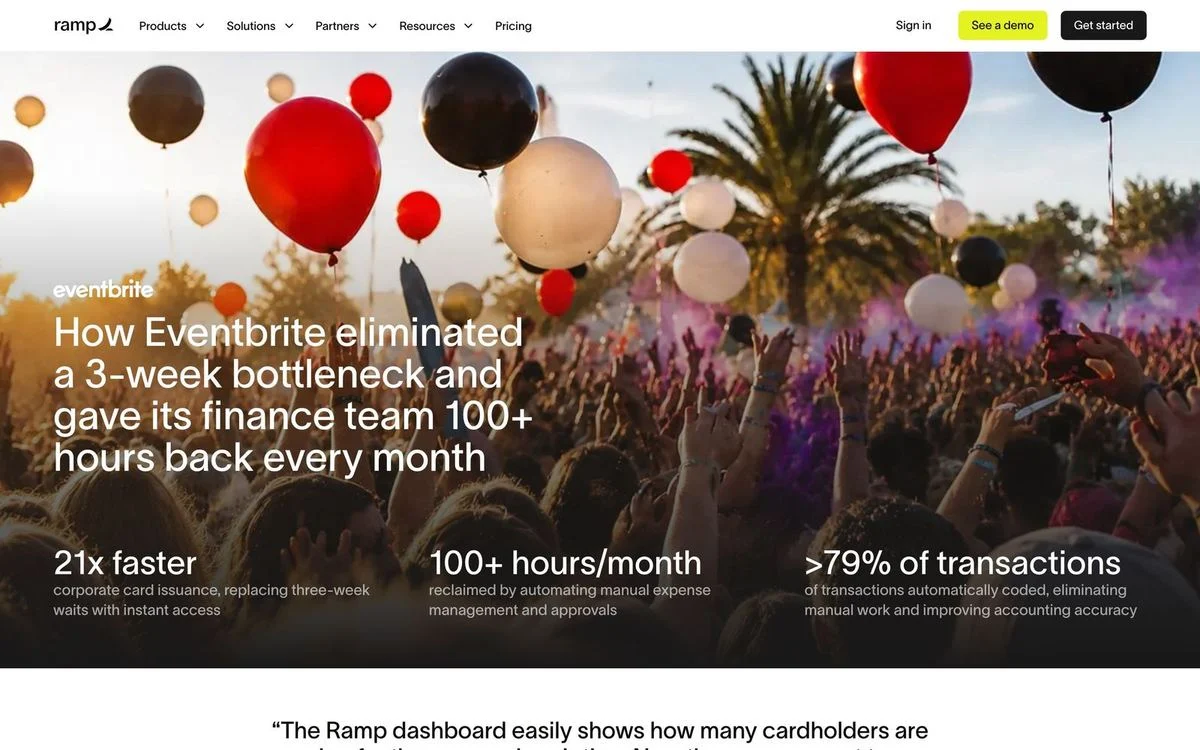
Example: Ramp: Eventbrite
How it is set up: The headline is the whole story: “How Eventbrite eliminated a 3-week bottleneck and gave its finance team 100+ hours back every month”. Three numbers sit across the bottom of the photo: 21x faster card issuance, 100+ hours a month and over 79% of transactions coded automatically.
What stands out: The section headings tell the before, during and after on their own, from “A three-week wait for a corporate card was slowing down a global workforce” to “Less manual work, fewer surprises, and 100+ hours back every month”.
Steal this: Write the headline as before and after, with numbers, and make each section heading a sentence.
2. Rippling and Kleiner Perkins
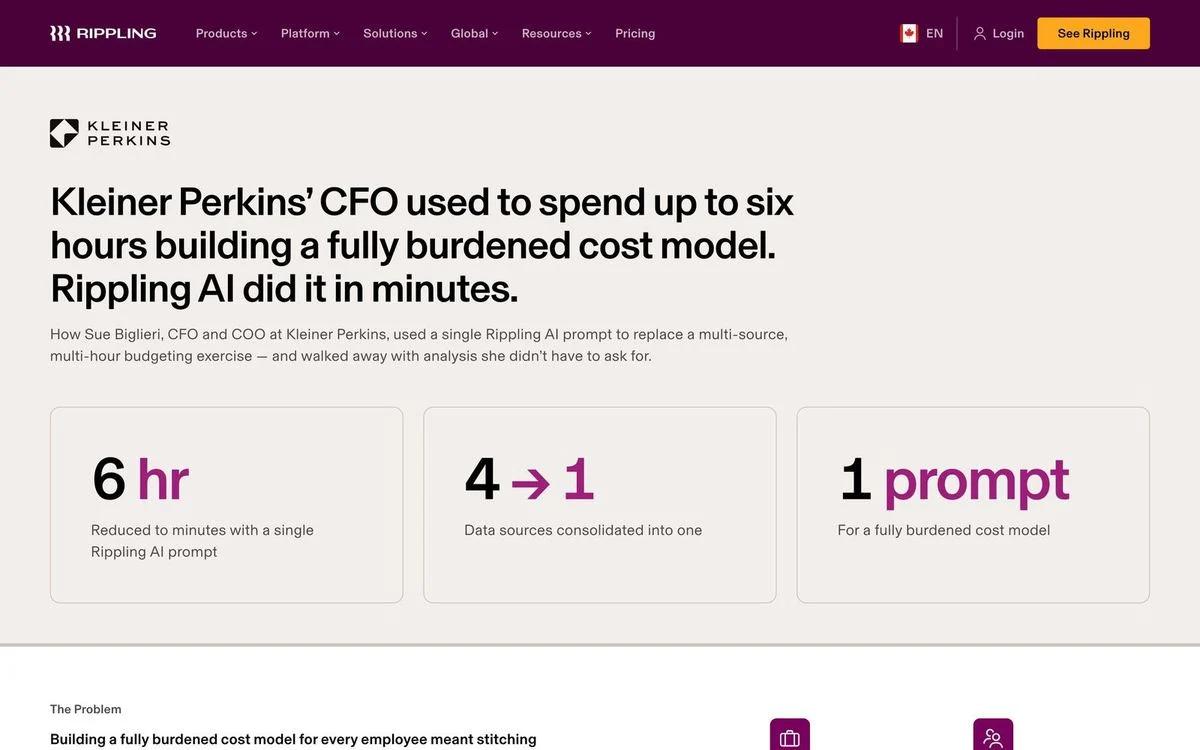
Example: Rippling: Kleiner Perkins
How it is set up: “Kleiner Perkins’ CFO used to spend up to six hours building a fully burdened cost model. Rippling AI did it in minutes.” Three cards follow: 6 hours reduced to minutes, 4 data sources consolidated into 1, and 1 prompt for the whole model.
What stands out: The story is about one named task done by one named executive, which makes the result easy to picture. The page is labeled The Problem, The Solution and The Impact.
Steal this: Pick one painful task and show the time it took before and after.
3. Vanta and Duolingo
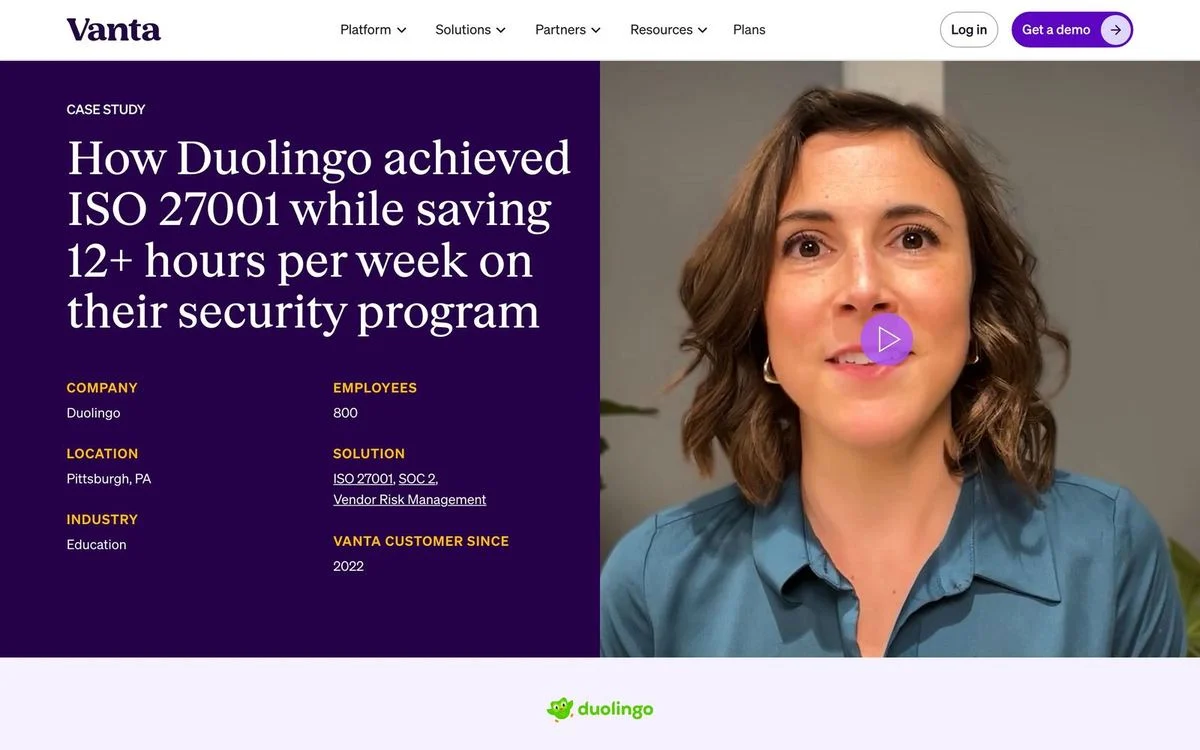
Example: Vanta: Duolingo
How it is set up: “How Duolingo achieved ISO 27001 while saving 12+ hours per week on their security program”, next to a video of the customer. A facts panel lists the company, employee count, location, industry, the Vanta products used and the year Duolingo became a customer.
What stands out: The facts panel lets a buyer check fit at a glance: is this company like mine?
Steal this: Add a facts panel with size, industry and products used, so buyers can match themselves to the story.
4. Gem and One Medical
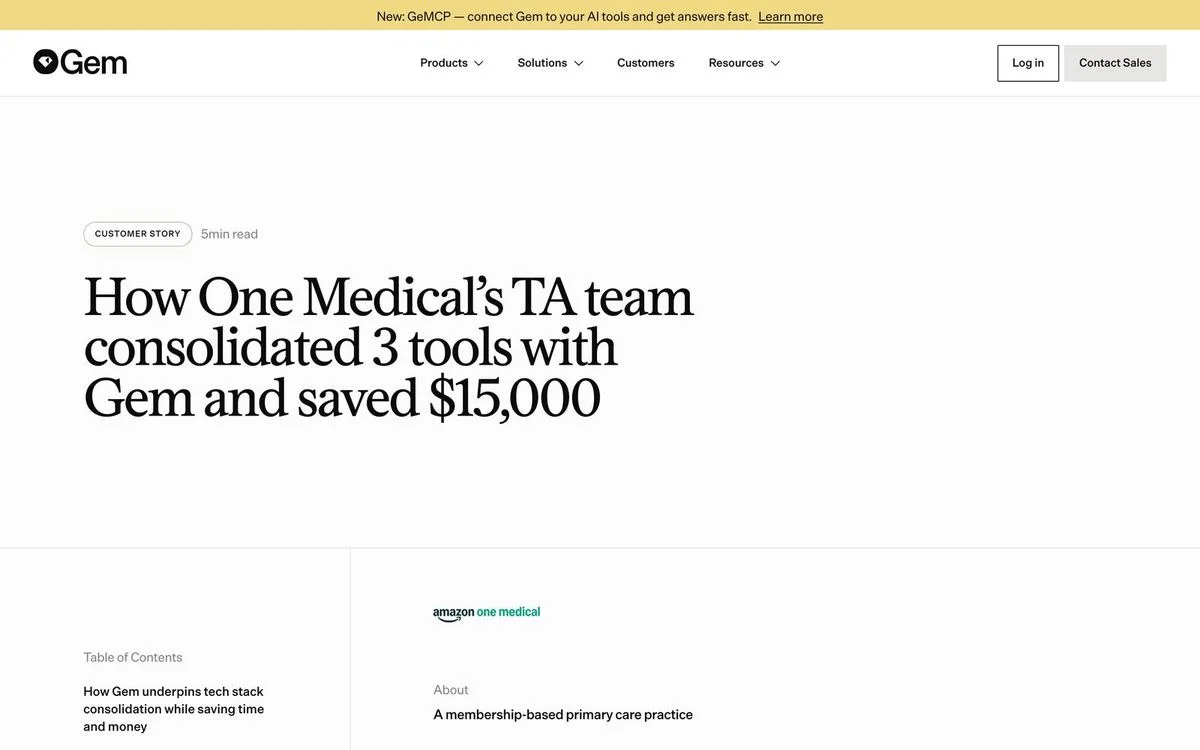
Example: Gem: One Medical
How it is set up: A “Customer story” tag and a read time, then “How One Medical’s TA team consolidated 3 tools with Gem and saved $15,000”, with a table of contents and sections for Pain Points and Results with Gem.
What stands out: The headline has two numbers that a budget owner cares about: tools removed and dollars saved.
Steal this: For buyers who must justify spend, put the saving in dollars in the headline.
5. Canva and Virgin Voyages
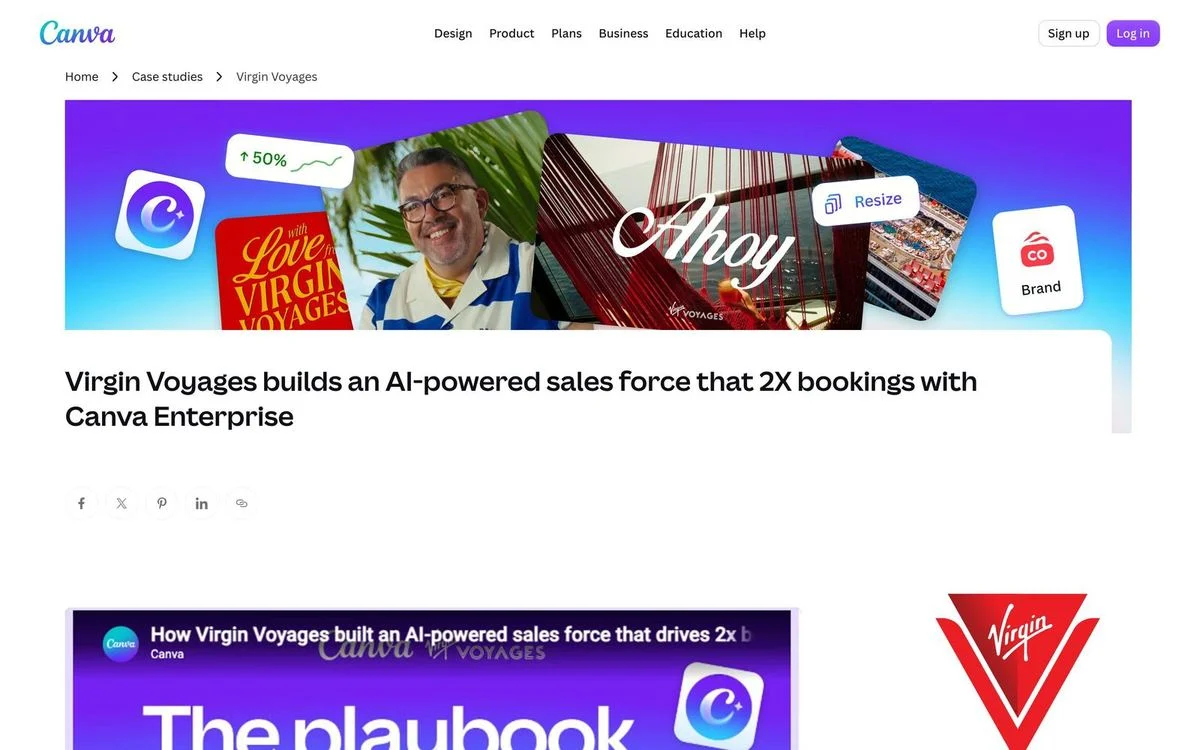
Example: Canva: Virgin Voyages
How it is set up: A colorful collage of the customer’s designs, then “Virgin Voyages builds an AI-powered sales force that 2X bookings with Canva Enterprise”, followed by a video playbook.
What stands out: The hero shows the actual work the customer made with the product.
Steal this: Show what the customer produced with your product, not just their logo.
6. Navan and Canva
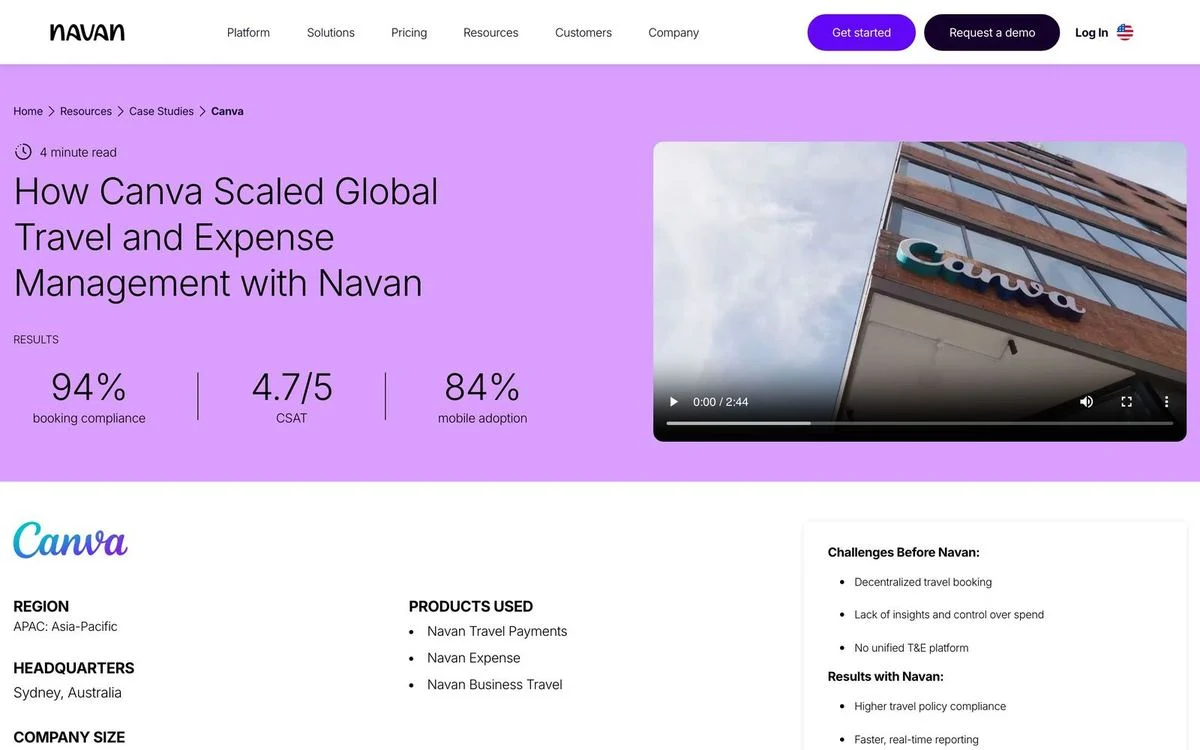
Example: Navan: Canva
How it is set up: “How Canva Scaled Global Travel and Expense Management with Navan” with three numbers (94% booking compliance, 4.7/5 satisfaction, 84% mobile adoption) and a short video beside them. Below, a facts box and two lists: Challenges Before Navan and Results with Navan.
What stands out: The two lists summarize the whole story for readers who will not scroll.
Steal this: Add a “before” and “results” list near the top for skimmers.
7. Mixpanel and ATB Financial
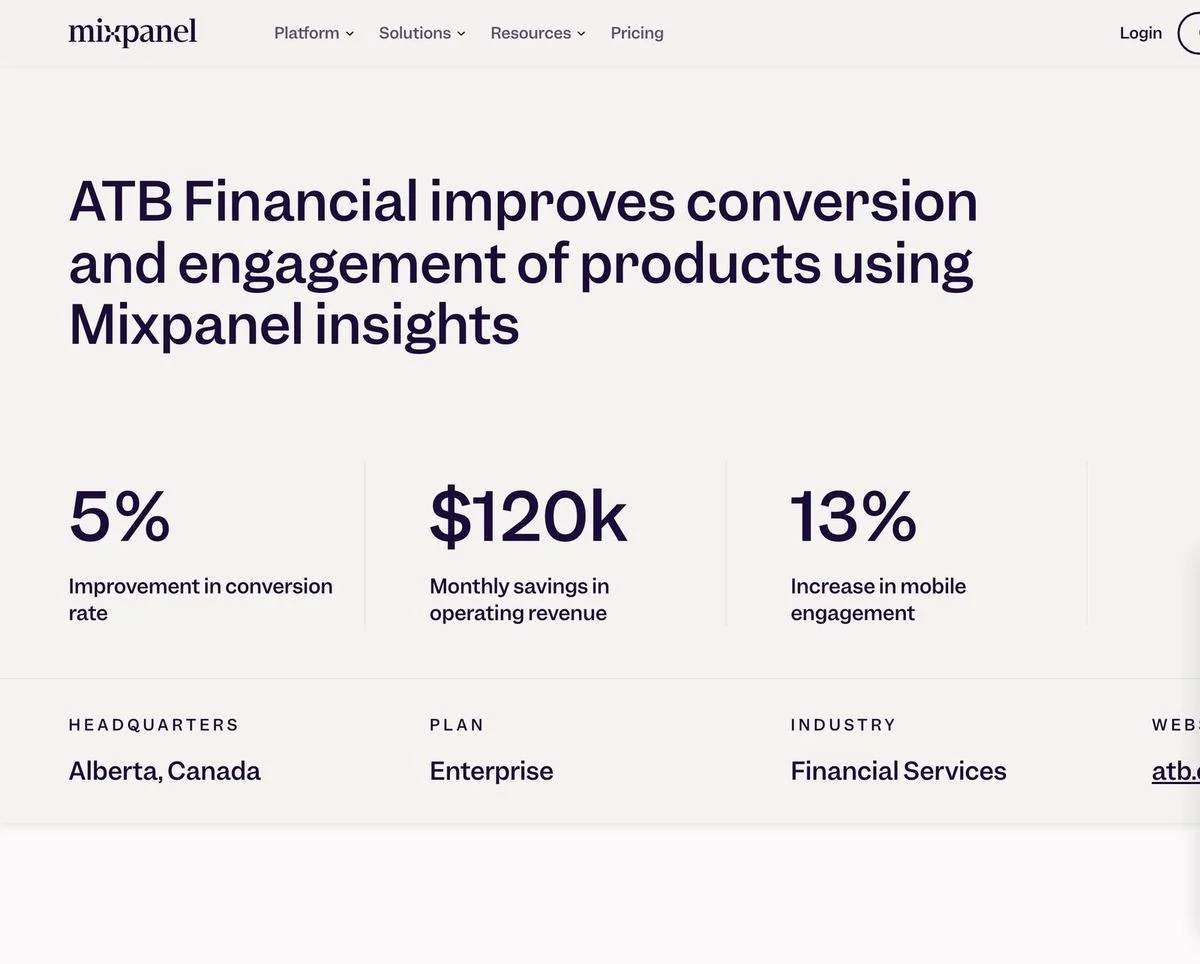
Example: Mixpanel: ATB Financial
How it is set up: The headline, the customer’s logo and three numbers: a 5% improvement in conversion, $120k in monthly operating savings and a 13% increase in mobile engagement, with headquarters, plan and industry below.
What stands out: The body is written as questions and answers, such as “How did you evaluate tools on the market?” and “Why did you choose Mixpanel?”.
Steal this: Answer the questions your buyer’s evaluation team will ask, in the customer’s words.
Turn customer wins into pages: Ploy’s AI website builder builds case study pages on your design system, so every story matches your site.
Turn case study readers into demos
Ploy builds on-brand pages and shows which companies visit them.
Challenge, solution and results case studies
These six follow the classic problem, solution and results arc.
8. Gong and Nasdaq
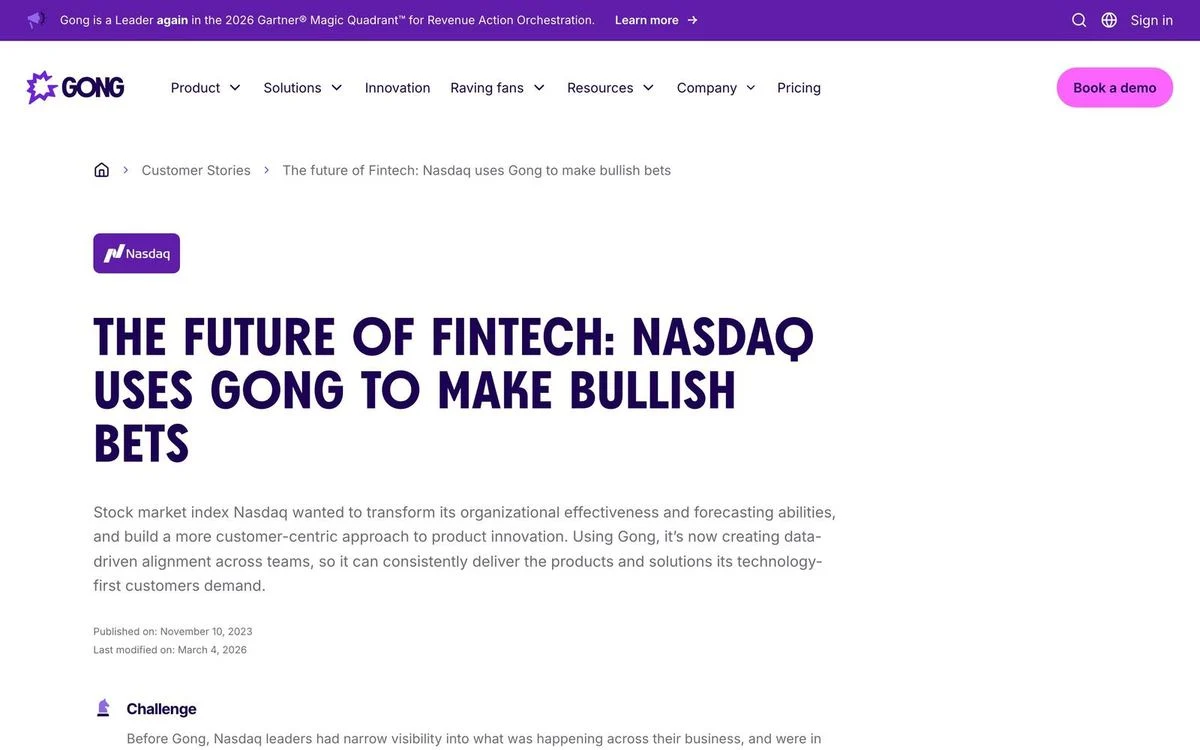
Example: Gong: Nasdaq
How it is set up: A Nasdaq badge, the headline in bold capitals, a short summary, and the published and last-modified dates. The page is split into Challenge and Outcome, with a facts box covering headquarters, founding year, employees and industry.
What stands out: The last-modified date tells buyers the story is still current.
Steal this: Show when the story was last updated, especially for older case studies.
9. Retool and DoorDash
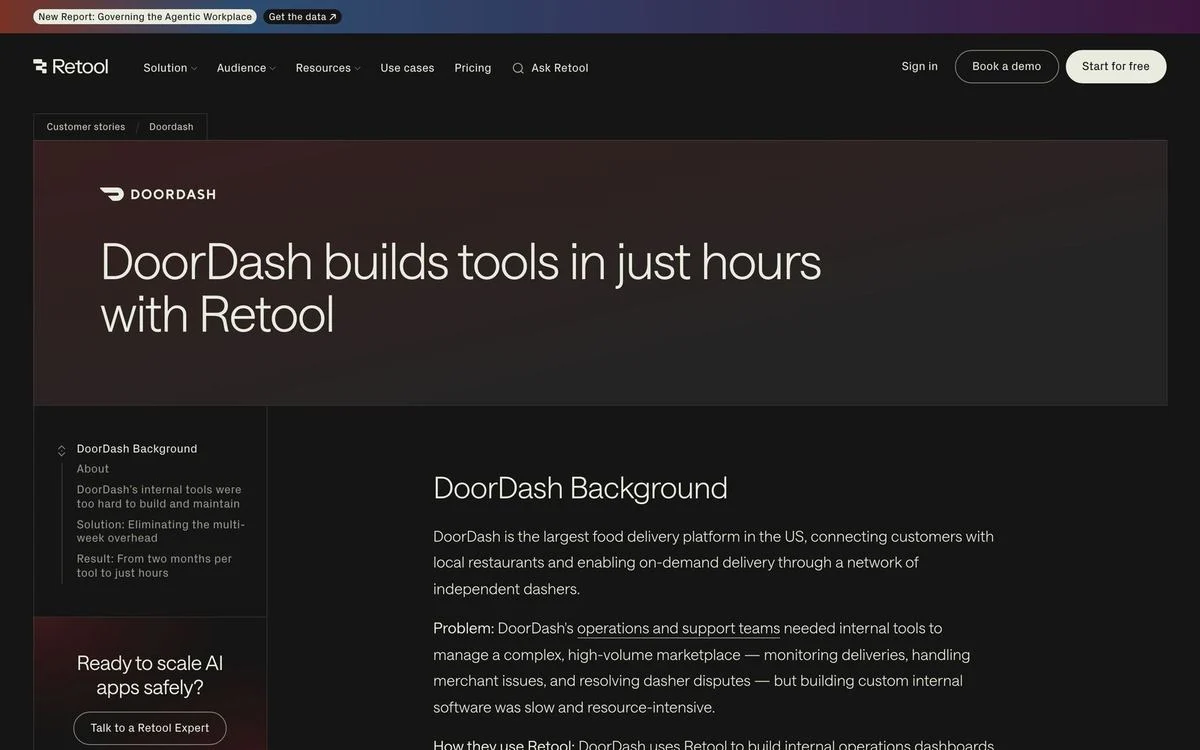
Example: Retool: DoorDash
How it is set up: “DoorDash builds tools in just hours with Retool”, then a left-hand outline (Background, About, the problem, the solution, the result) down the side of the story.
What stands out: The result is stated as a contrast: “From two months per tool to just hours”.
Steal this: Add a story outline so readers can jump to the result.
10. Calendly and Trusted Tech
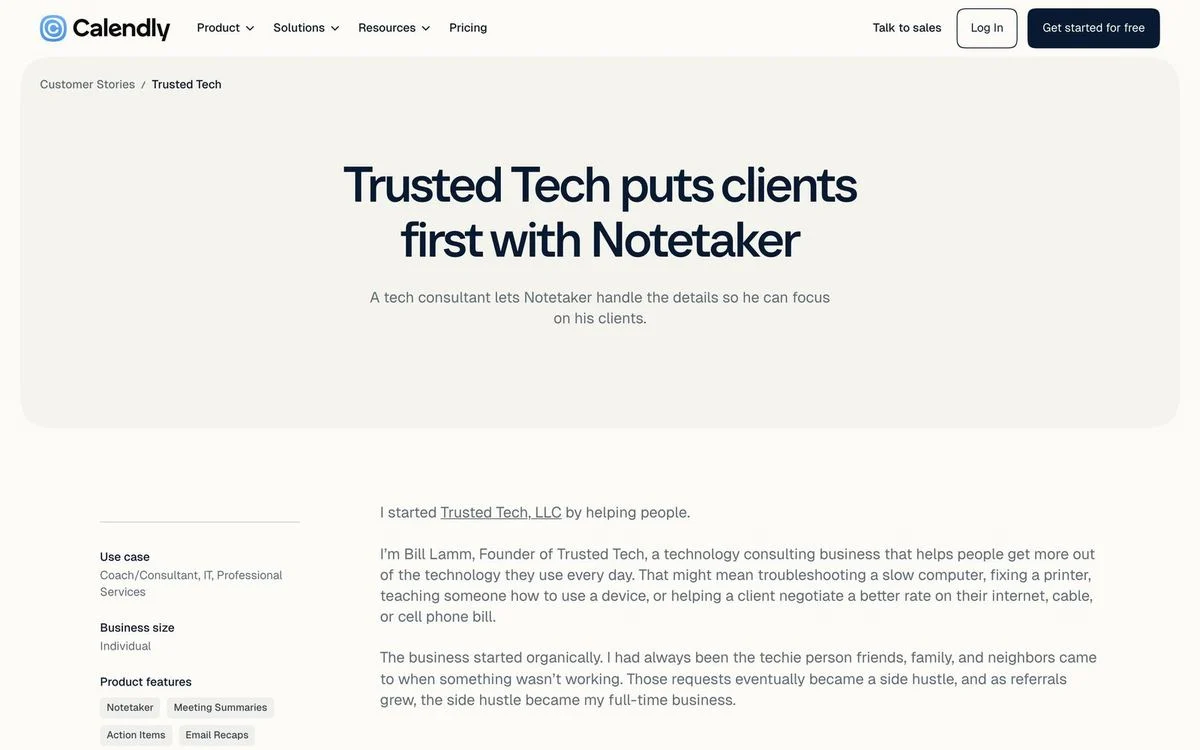
Example: Calendly: Trusted Tech
How it is set up: “Trusted Tech puts clients first with Notetaker”, a one-line summary, and a body written in the founder’s own voice (“I started Trusted Tech, LLC by helping people.”). Sections are labeled The Challenge, The Solution and Results and What’s Next.
What stands out: The first-person voice suits a one-person business, and the facts box lists the business size as an individual.
Steal this: For small customers, let them tell the story in the first person.
11. Deel and FICO
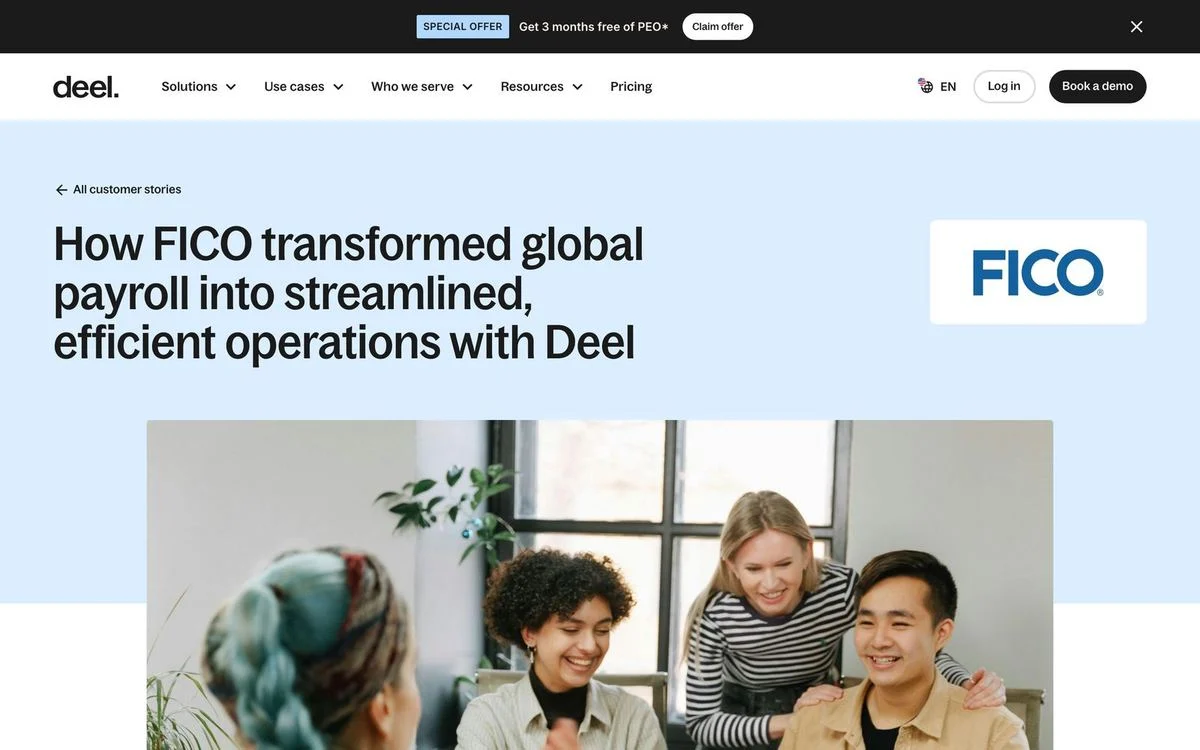
Example: Deel: FICO
How it is set up: “How FICO transformed global payroll into streamlined, efficient operations with Deel”, the FICO logo and a photo, then short sections starting with “Multiple vendors, multiple headaches”.
What stands out: At under 800 words, it is one of the shortest stories here, and the section headings carry the argument.
Steal this: Name the problem in a memorable phrase, like “multiple vendors, multiple headaches”.
12. Zendesk and Liberty Tax
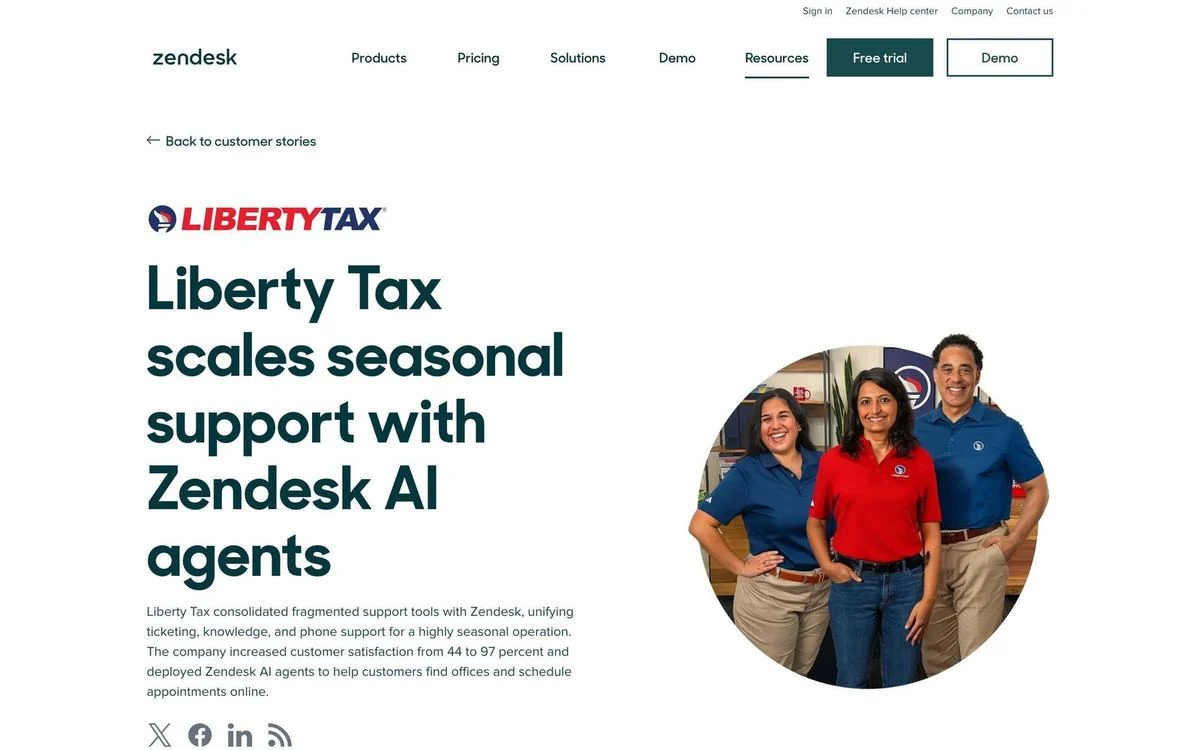
Example: Zendesk: Liberty Tax
How it is set up: The Liberty Tax logo, “Liberty Tax scales seasonal support with Zendesk AI agents”, a summary that includes the headline result (customer satisfaction rose from 44 to 97 percent), and a photo of the team.
What stands out: The facts box includes a number unique to the business: how many seasonal agents it hires.
Steal this: Include the one fact that makes the customer’s situation distinctive.
13. Dropbox and Elbphilharmonie
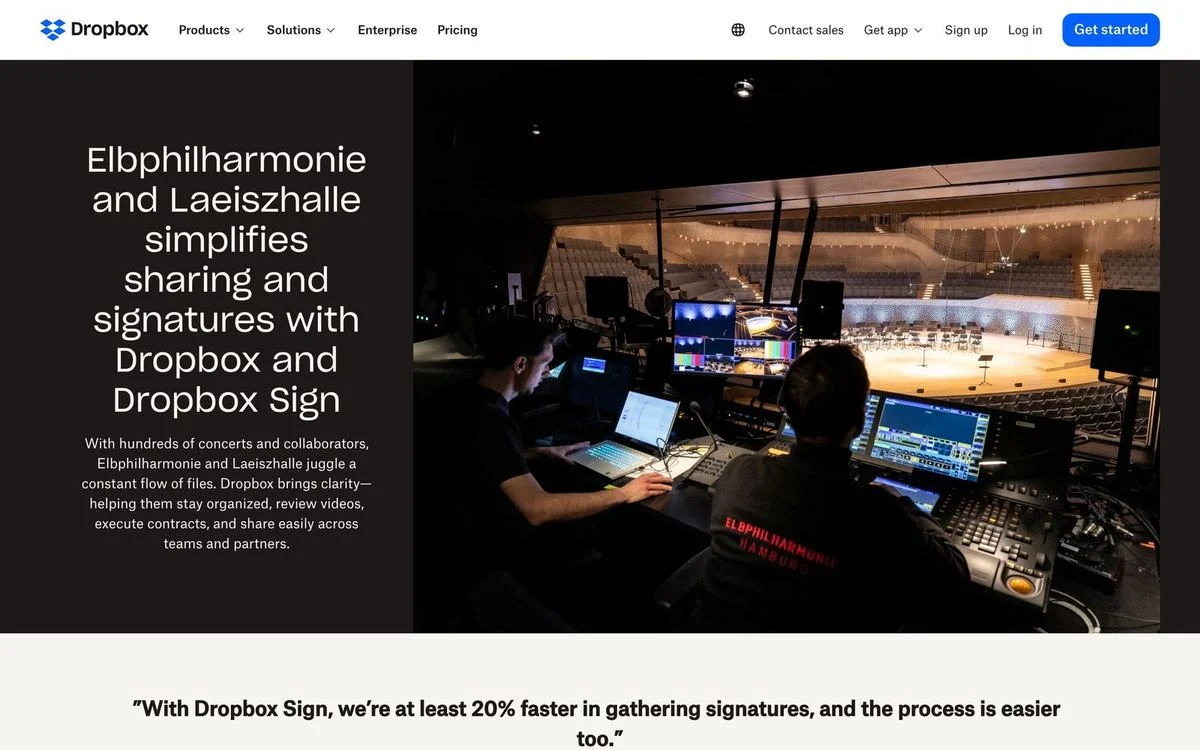
Example: Dropbox: Elbphilharmonie
How it is set up: A photo of the concert hall’s control room beside the headline and a short summary, then a large pull quote: “With Dropbox Sign, we’re at least 20% faster in gathering signatures, and the process is easier too.”
What stands out: A memorable customer (a famous concert hall) makes a routine use case interesting.
Steal this: Put the customer’s best one-line quote, with a number, right after the hero.
Show proof on your own pages: see our testimonial examples for shorter proof you can place across your site.
Story-led case studies with famous customers
These five lean on a well-known customer and a narrative.
14. Stripe and Rivian
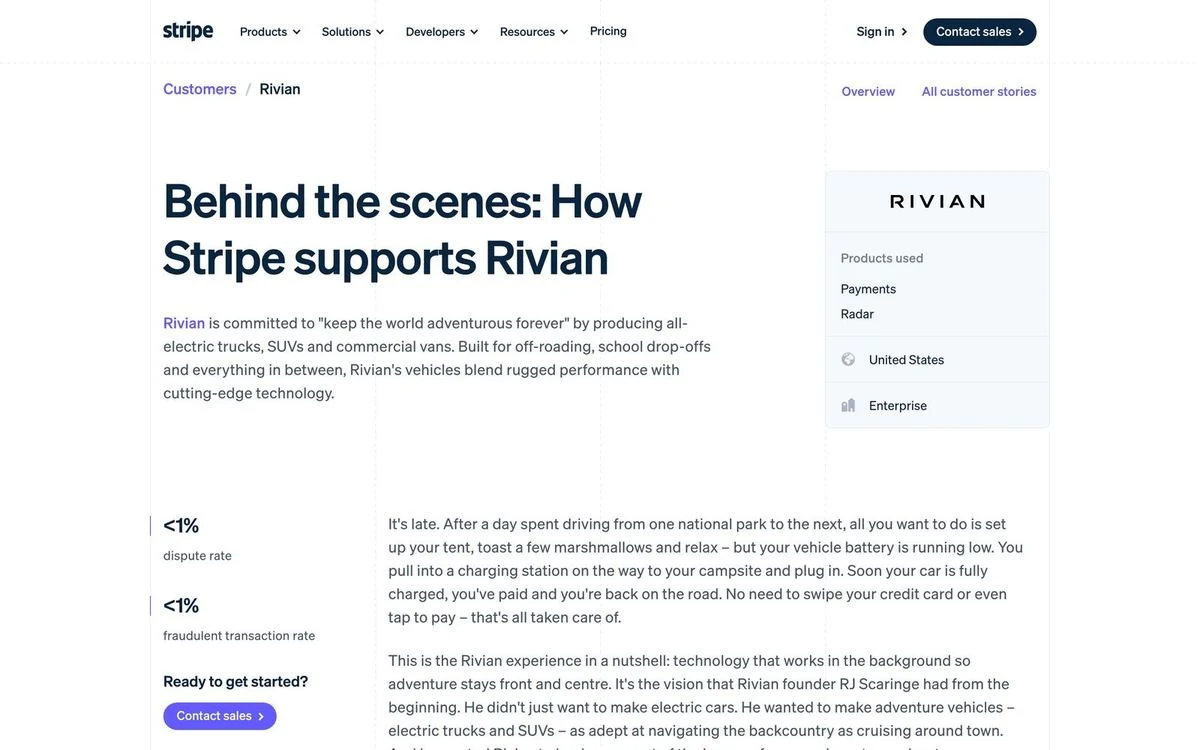
Example: Stripe: Rivian
How it is set up: “Behind the scenes: How Stripe supports Rivian”, a sidebar listing the products used and the region, and two numbers on the left (dispute rate and fraudulent transaction rate both under 1%). The body opens with a scene: a day of driving between national parks, ending at a charging station.
What stands out: It opens with the end customer’s experience, not the vendor’s features.
Steal this: Start with a scene from your customer’s customer.
15. Slack and Verizon
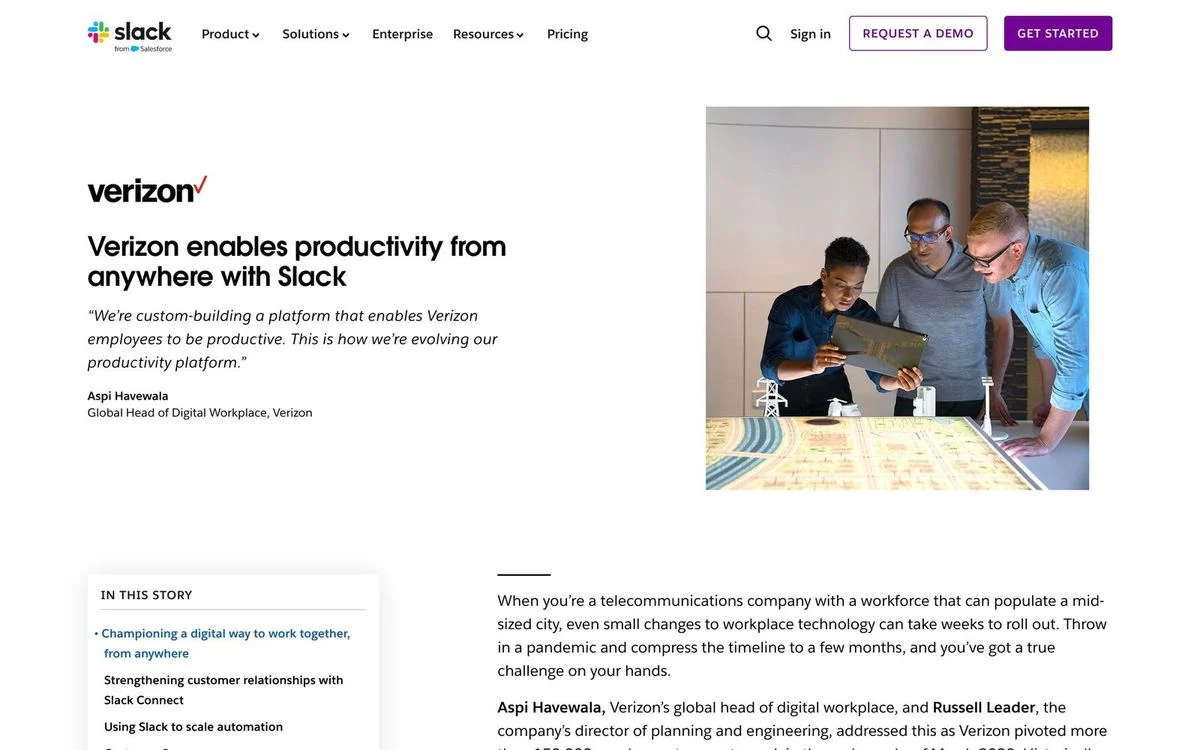
Example: Slack: Verizon
How it is set up: The Verizon logo, “Verizon enables productivity from anywhere with Slack”, a quote from Verizon’s global head of digital workplace, with name and title, a team photo, and an “In this story” outline.
What stands out: The named quote sits in the hero, before any body copy.
Steal this: Put a named, titled quote on the first screen.
16. Okta and McLaren
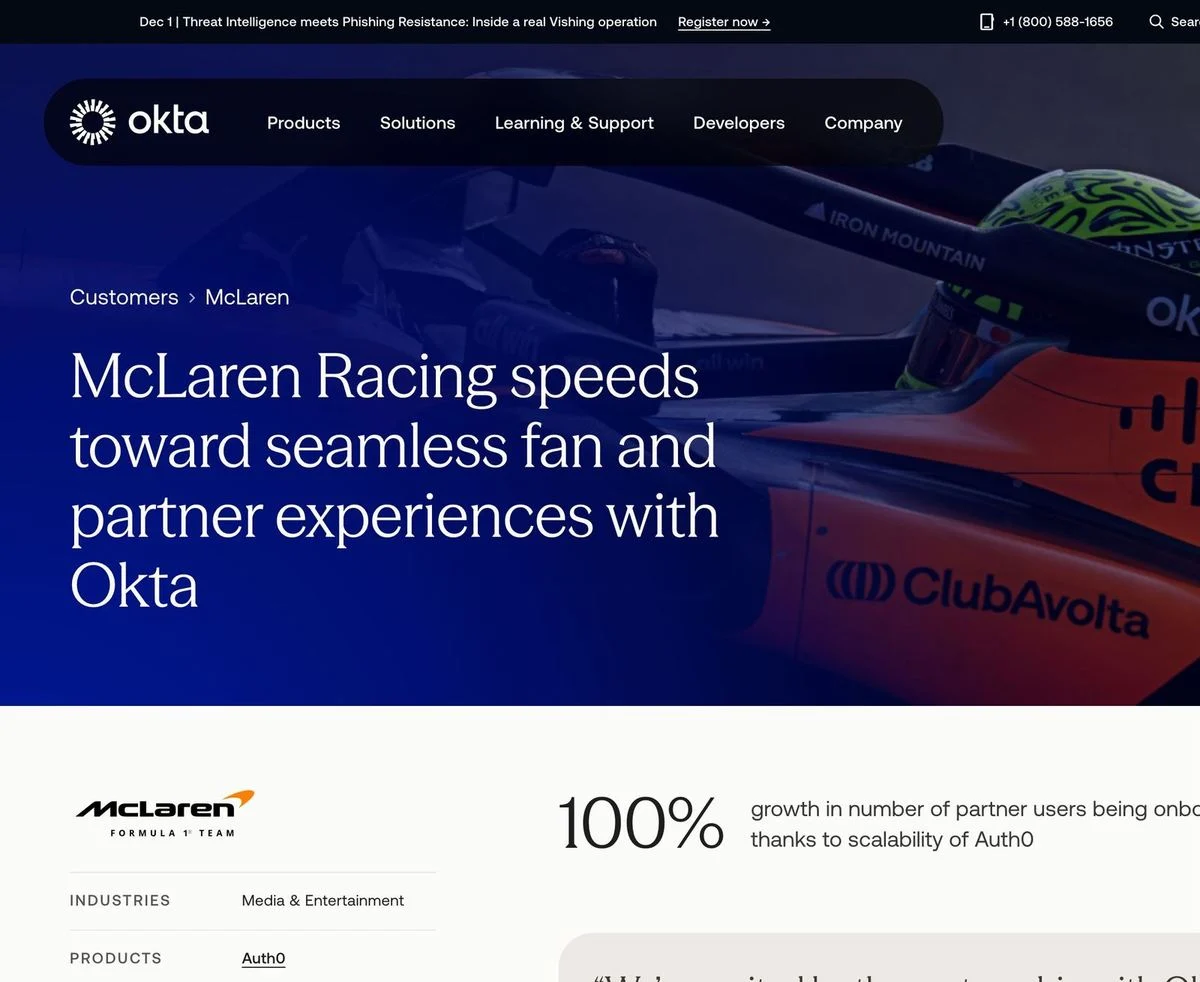
Example: Okta: McLaren
How it is set up: A Formula 1 car fills the background behind “McLaren Racing speeds toward seamless fan and partner experiences with Okta”, with one big number below: 100% growth in partner users onboarded.
What stands out: The imagery does the work: a race car sells speed without a word.
Steal this: Use the customer’s own world in the imagery.
17. Plaid and GoFundMe
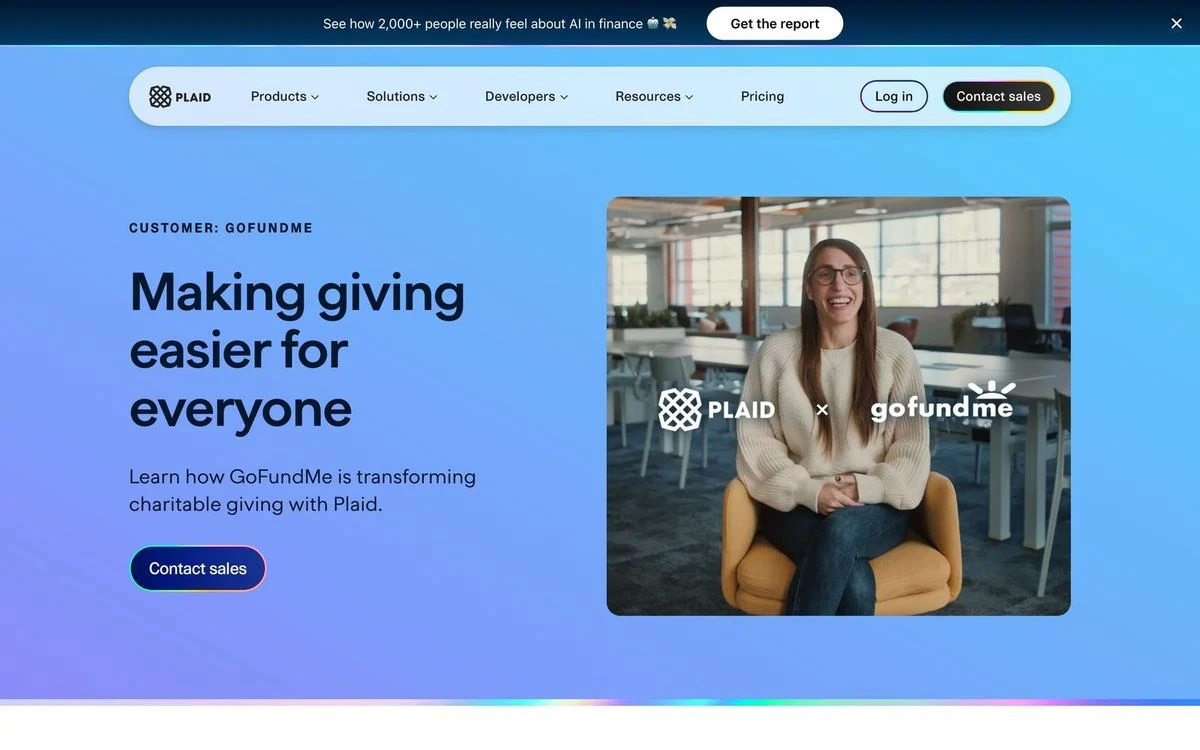
Example: Plaid: GoFundMe
How it is set up: “Customer: GoFundMe”, the headline “Making giving easier for everyone”, one line of summary, a “Contact sales” button and a video of the customer. A quote follows: “When we built Giving Funds, Plaid was a no-brainer.”
What stands out: The headline is about the customer’s mission, not the vendor.
Steal this: Lead with your customer’s mission, and put a sales button on the story.
18. Notion and Toyota
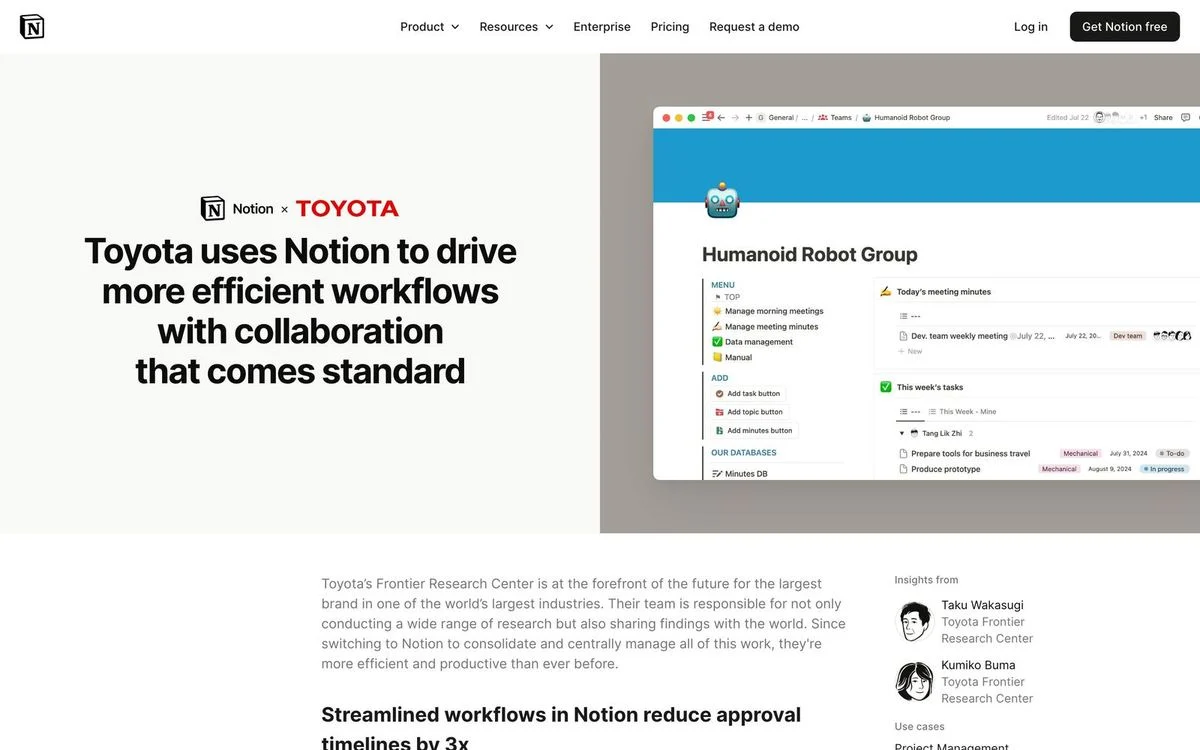
Example: Notion: Toyota
How it is set up: A “Notion × Toyota” lockup, the headline, and a real Notion workspace from Toyota’s team on the right. Two Toyota people are named under “Insights from”, and a section reports approval timelines cut by 3x.
What stands out: The screenshot shows how the customer actually set up the product.
Steal this: Show the customer’s real setup, with permission.
Workflow walkthrough case studies
These two show how people at the customer work day to day.
19. Linear and Clio
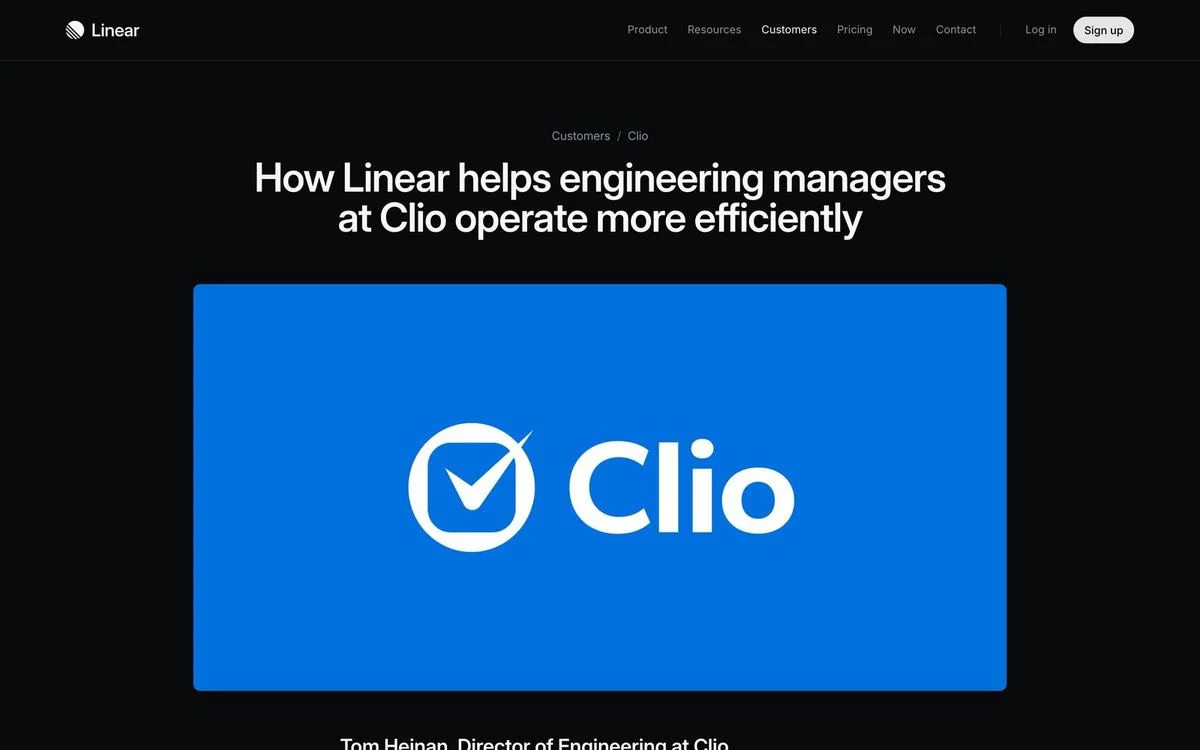
Example: Linear: Clio
How it is set up: “How Linear helps engineering managers at Clio operate more efficiently”, then a short profile of one engineering director and three numbered workflows: personal task tracking, understanding project health and managing team hackathons.
What stands out: It reads like a how-to from a peer, at about 600 words.
Steal this: Write a case study as “how one person uses it”, with numbered workflows.
20. Lattice and PitchBook
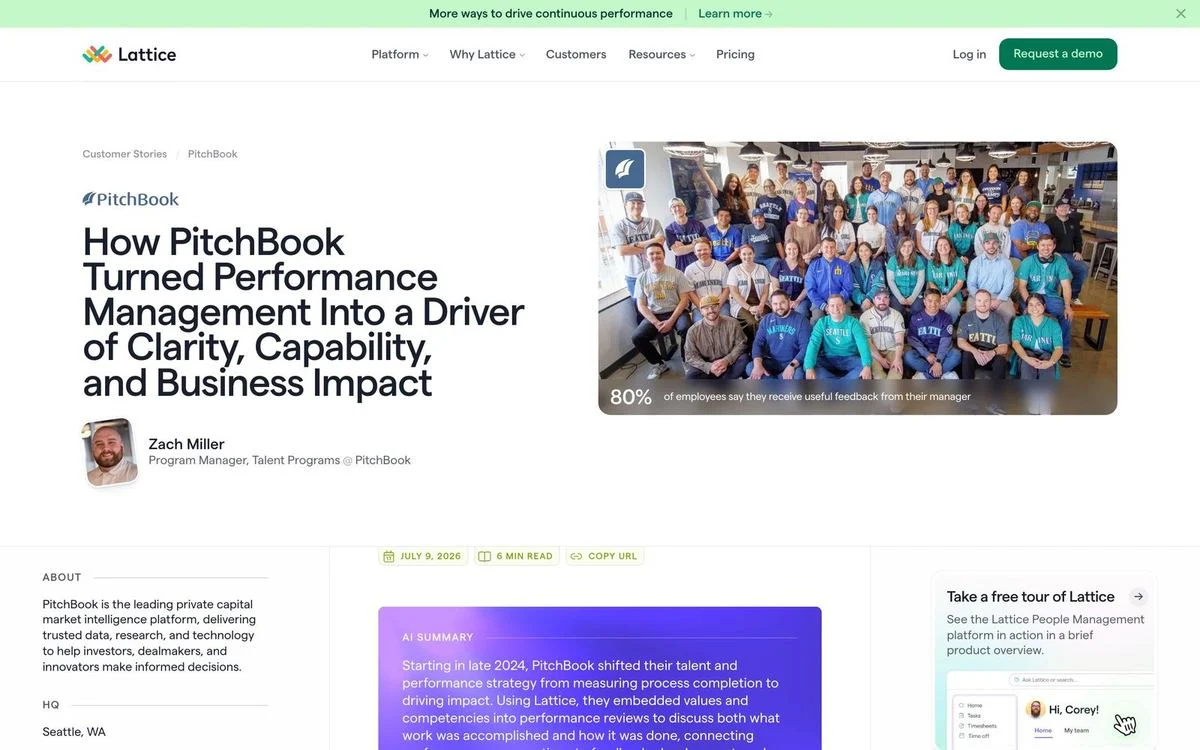
Example: Lattice: PitchBook
How it is set up: A long headline on how PitchBook changed performance management, the program manager’s name and photo, a team photo with “80% of employees say they receive useful feedback from their manager”, and an AI-written summary box at the top of the story.
What stands out: The summary box gives readers the gist before they commit to a long read.
Steal this: Add a short summary box at the top of long case studies.
Case study best practices
- Put the result in the headline, with a number, like Ramp’s “100+ hours back every month”.
- Add large result figures on the first screen. Six of the 20 do.
- Help buyers match themselves with a facts box: industry, size, region, products used, as Vanta and Navan do.
- Label the structure (challenge, solution, results) so skimmers can jump, as Rippling and Mixpanel do.
- Name real people, with titles and photos.
- Keep it short, or add a summary box (Lattice) and an outline (Retool).
- Show the work or the setup: Canva’s designs, Notion’s workspace.
- Keep it current, with a last-updated date (Gong).
For proof formats beyond full case studies, see our testimonial examples and about us page examples. For the pages that turn readers into demos, see our B2B landing page examples and the wider landing page examples roundup.
How to build a case study page with Ploy
- Start from your brand. Ploy builds a brand design system from your URL, so every story matches your site.
- Turn the interview into the page. Ploy can turn Zoom recordings and transcripts into case study drafts.
- Describe the layout: “Case study: results headline, three-number row, facts box, challenge, solution, results, one named quote.”
- Reuse one template for every customer, so new stories take minutes.
- Send stories to the right accounts. Ploy for sales teams covers personalized pages for outreach.
See how Ploy customers work in our own stories on Clay’s lead magnets and Avoca’s ABM program, or browse Ploy customers.
Build case study pages that convert
Start with an on-brand page, then see which companies visit it.